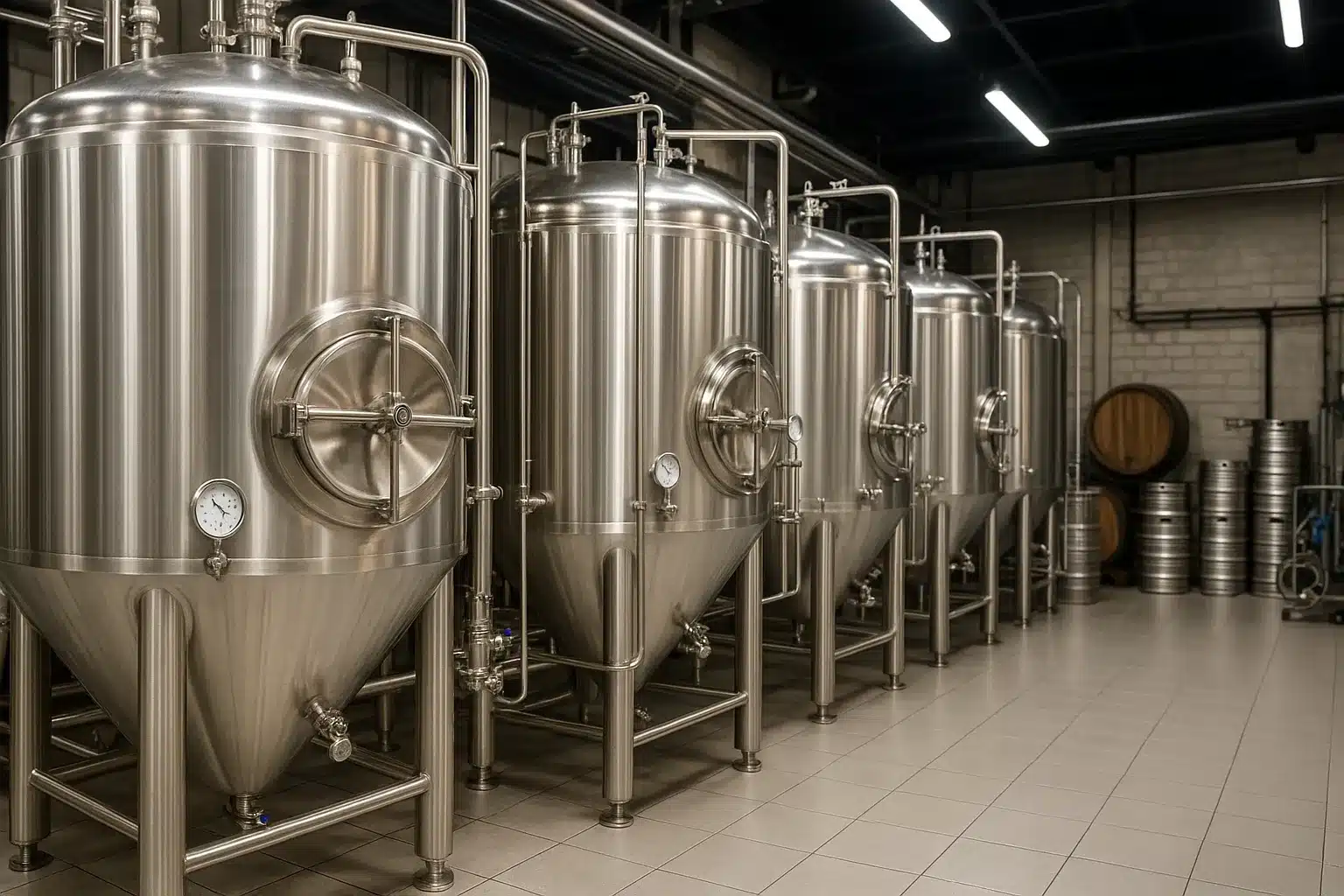
Fermentation tanks are arguably the most important equipment in any brewery. They are where wort becomes beer—the biological transformation that defines your product’s flavor, consistency, and quality. But not all fermentation tanks are created equal. Choosing the right tank is a strategic decision that affects production capacity, beer quality, operational efficiency, cleaning cycles, cost, and scalability.
This comprehensive guide walks you through everything you need to know before buying fermentation tanks—from understanding different types of tanks and key specifications to evaluating materials, features, sizing, and cost considerations. We’ll also cover installation tips, common mistakes to avoid, and future-proofing your brewery. At the end, you’ll find three frequently asked questions and a recommendation for Micet’s fermentation tank solutions.
Why Fermentation Tanks Matter
Fermentation tanks are where your beer develops its character. They influence:
- Yeast performance and health
- Temperature control and consistency
- Clarification and conditioning
- Carbonation strategy
- Sanitation and cleaning efficiency
Poor tank design or incorrect sizing can lead to inconsistent beer quality, longer turnaround times, or even batch loss. A well-chosen fermentation tank system supports workflow efficiency and maximizes brewery capacity.
1. Types of Fermentation Tanks
Understanding the different types of tanks helps you choose the best fit for your brewery’s goals.
Unitanks (Universal Tanks)
What they are:
Pressure-capable tanks that can ferment, condition, and serve beer.
Advantages:
Dual function (fermentation + conditioning)
Less handling and transfer
Reduced oxygen pickup
Faster turnaround
Best for:
Breweries focused on efficiency and space-saving.
Standard Conical Fermenters
What they are:
Traditional conical tanks used only for fermentation.
Advantages:
Simplicity
Cost-effective
Easy to harvest yeast
Best for:
Breweries that want separate conditioning tanks or specific workflows.
Horizontal Fermenters
What they are:
Wider tanks with horizontal orientation.
Advantages:
Larger surface area
Good for yeast flocculation and cold conditioning
Best for:
Lagers or beers needing extensive cold aging.
Open Top Fermenters
What they are:
Tanks with an open top (or loosely covered) for fermentation.
Advantages:
Historical/flavor-driven fermentation
Easier to manage krausen
Disadvantages:
Higher contamination risk
Requires strict sanitation
Best for:
Specialty and historic-style breweries.
2. Key Specifications to Evaluate
When selecting a fermentation tank, these specifications directly influence performance and suitability:
Volume and Capacity
Batch size vs tank number:
Ensure your total fermentation capacity matches your production plan.
Turns per month:
Tank capacity matters less than how often you can turn a tank in a month.
Expansion planning:
Buy enough tanks to meet growth without overspending upfront.
Pressure Rating
Non-pressurized tanks for open or standard fermentation
Pressurized tanks for advanced carbonation, forced carbonation, or natural spunding
Choose pressure ratings that match your carbonation strategy.
Material & Construction
Stainless steel grade: 304 is standard; 316 may be used for special cleaning environments.
Wall thickness: Thicker walls improve durability and support heavier insulation.
Weld quality: Smooth, sanitary welds reduce contamination risk and improve cleaning.
Insulation & Temperature Control
Jacketed tanks: For glycol cooling, precise control, and stable fermentations
Insulation type: Polyurethane insulation improves temperature stability and lowers energy costs
Good temperature control directly affects yeast health and beer quality.
Sanitary Features
Tri-clamp fittings
CIP (Clean-In-Place) spray balls
Sampling ports
Ports for racking arms and accessories
These help maintain sanitation and reduce labor.
3. Materials and Sanitary Considerations
Food-grade stainless steel is the industry standard, but not all stainless tanks are equal.
Stainless Steel Grades
304 Stainless Steel:
Standard food-grade. Excellent corrosion resistance and cleanability.
316 Stainless Steel:
Higher corrosion resistance. Useful in sour or highly acidic applications.
Internal Surface Finish
A smooth internal finish (e.g., 2B or better) prevents microbial traps and simplifies cleaning.
Weld Quality
Sanitary welds:
Uniform beads with no undercuts or pits.
Avoid dead legs where liquid can collect and spoil.
4. Temperature Control Systems
Temperature affects yeast metabolism and flavor production. Precision cooling systems are essential.
Glycol Cooling Jackets
Integrated glycol jackets give consistent temperature control throughout fermentation.
Multiple Zones
Some tanks offer multi-zone cooling, allowing different fermentation profiles in one tank.
Sensors and Controls
Digital temperature probes
Control panels
Remote monitoring options
These add precision and repeatability.
5. Tank Features That Increase Efficiency
Certain features add convenience and operational efficiency:
Large Manways
Allow easy access for inspection and cleaning.
Sampling Valves
Enable easy monitoring of fermentation progress.
Racking Arms
Make it easier to separate beer from yeast and trub.
Pressure Gauges & Safety Valves
Essential for pressurized tanks.
Integrated CIP
Built-in Clean-In-Place systems save labor.
6. Sizing Your Fermentation Tank System
Choosing tank sizes depends on your production goals.
Consider Your Brew Schedule
If you brew once a week and have long fermentation times (e.g., lagers), you need more capacity and potentially more tanks.
If you brew frequently with short fermentation cycles (e.g., ales), you can make do with fewer tanks.
Calculate Tank Turns
A brewery with a 7-day fermentation:
Required tanks = (weekly production × fermentation days) ÷ tank volume
Always plan for tank turns per month, not just total volume.
Approaches to Capacity Planning
Multiple smaller tanks: flexible but more fittings and cleaning
Fewer large tanks: efficient, but may limit flexibility
Combination: strategic mix
7. Cleaning and Maintenance Considerations
A tank that’s easy to clean saves labor and reduces contamination risk.
CIP (Clean-In-Place) Systems
Integrated spray balls
Dedicated CIP lines
Drainage designed for flow-through
Surface Finish
Smooth surfaces reduce residual sediment
No dead legs
Access Points
Manways and ports
Easy access for visual inspection
8. Cost Factors to Consider
Fermentation tanks vary in price based on:
Material Quality
Higher-grade steel and thicker walls cost more.
Pressure Rating
Pressurized tanks are more expensive due to design requirements.
Size and Shape
Larger tanks require more material and fabrication time.
Customization
Special features (like custom ports or advanced instrumentation) add cost.
Lead Time
Custom tanks often require longer lead times, impacting project scheduling.
9. Installation and Utility Integration
Buying tanks is just one part of the process—installing and integrating them matters too.
Placement and Floor Loads
Tanks are heavy when full
Confirm that floor structures can support capacity
Glycol and Utilities
Glycol chiller sizing must match total jacket load
Water and drainage must be planned
CO₂ and compressed air hookups must be coordinated
Layout and Workflow
Pathways for access and cleaning
Hose routing
Adjacent CIP and packaging systems
10. Certifications and Compliance
If you plan to export or adhere to certain standards, certifications matter.
ASME
Pressure vessels may require ASME certification.
3A Sanitary
For high-sanitary applications.
CE / PED
For European markets or global compliance.
Confirm that tank documentation matches your regulatory needs.
11. Choosing Between Custom vs Standard Tanks
Standard Off-the-Shelf Tanks
Widely available
Faster delivery
Lower upfront cost
Custom Tanks
Tailored to your space and process
Accommodation for unique beer styles or workflows
Improved workflow and reduced rework
Often better long-term value
Custom tanks make sense when your brewery space, process, or product goals diverge from standard options.
12. Common Mistakes to Avoid
Here are pitfalls many breweries encounter:
1. Underestimating Capacity Needs
Planning only for current production can leave you constrained later. Buy with future growth in mind.
2. Ignoring Utility Load
Not accounting for glycol demand or drain placement can stall projects.
3. Skipping Certifications
Especially if you export or operate in regulated markets.
4. Overcomplicating Cleans
Too many small ports or hard-to-reach spots increase clean time and contamination risk.
5. Poor Layout Planning
Not thinking about access for cleaning, maintenance, or expansions.
13. Evaluating Manufacturers
When choosing a tank supplier, evaluate:
Material and Welding Quality
Ask for:
Material specs
Photos of welded joints
Surface finish documentation
Lead Time Transparency
Get a written delivery schedule.
Support and After-Sales
Warranty and parts availability matter.
Documentation
As-built drawings, P&IDs, and test reports should be provided.
14. Cost vs Value: Total Cost of Ownership
Consider:
Energy efficiency (jacket insulation)
Labor savings (CIP)
Reduced downtime
Scalability
A cheaper tank upfront may cost more over its lifetime.
15. Future-Proofing Your Tank Purchase
Ask yourself:
Will this tank support future beer styles?
Is there room for automation upgrades?
Can I add sensors or controls later?
Will this tank fit in an expanded layout?
Good planning now saves expensive retrofits later.
Recommendation: Choose Micet for Your Fermentation Tank Needs
When it’s time to invest in fermentation tanks that balance quality, performance, and long-term reliability, Micet stands out as a partner worth considering.
Why Micet?
High-grade stainless steel construction
Sanitary internal finishes
Customized sizing and fittings
Flexible pressure ratings
Efficient glycol jacket systems
Detailed engineering support
Clear lead time communication
After-sales parts and service support
Micet’s fermentation tank solutions are designed to support a wide range of brewery sizes and beer styles—from small taprooms to production facilities. Their expertise in brewery equipment helps you match tank design to process goals, maximize value, and minimize risk.
FAQs
1. What size fermentation tank should I buy first for my brewery?
Your first tank size depends on your target batch size, production schedule, and beer styles. A common approach is to base tank size on your primary batch (e.g., 10 BBL) and plan for at least three fermentation vessels to allow continuous brewing cycles and sufficient capacity for conditioning.
2. Do I need pressurized fermentation tanks?
Pressurized tanks are not required for all breweries but are recommended if you plan to force carbonate, spund, or package directly from fermentation vessels. If you only rely on traditional fermentation and separate conditioning tanks, non-pressurized options may be suitable.
3. How does glycol jacket design impact fermentation?
Glycol jackets help maintain precise temperatures during fermentation, which is critical for yeast health and beer quality. Multi-zone jackets provide flexibility for different fermentation profiles and can improve cooling efficiency compared to single-zone designs. Taba Squishy
Keep an eye for more latest news & updates on Tribune!