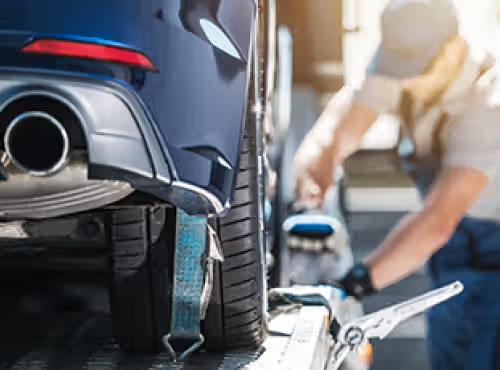
Relocating to California is a major move, whether you are heading there for a new job, university, family, retirement, or simply a different lifestyle. Between arranging housing, coordinating movers, changing utilities, and planning travel, it is easy to leave vehicle logistics until the last minute.
That is usually a mistake.
For a long-distance move, the question is not only whether you can drive your car to California. The better question is whether driving is actually the smartest use of your time and money. Many movers compare California auto transport options early because the cost of shipping can be more competitive than a multi-day drive once fuel, hotels, meals, mileage, and lost time are included.
This guide explains how to decide between driving and shipping, what vehicle transport to California typically costs, and how to plan a smoother move in 2026.
Start With the Real Cost of Driving
Driving your own car can feel like the cheaper option because you already own the vehicle and only need to pay for the trip. But the total is rarely just fuel.
A move from Chicago to Los Angeles, Dallas to San Francisco, or New York to San Diego can take several days. Your real driving budget may include:
- Fuel: approximately $250–$700 or more
- Hotels: approximately $200–$900
- Meals and snacks: approximately $150–$400
- Tolls and parking: approximately $50–$200
- Oil changes, tire wear, and maintenance
- Additional mileage and depreciation
- Time away from work, packing, or settling into your new home
For a cross-country move, the total can easily reach $1,000 to $2,000 before you account for the value of your time.
Driving can still make sense if you enjoy road trips, need the vehicle immediately, are moving a shorter distance, or want to carry essential personal items. But for many people, shipping is the more efficient option.
When Shipping Your Car Makes More Sense
Professional transport becomes especially useful when the move is long-distance or time-sensitive.
Shipping may be the smarter choice if:
- You are moving more than 1,000 miles.
- You have a strict job start date.
- You are flying with family, children, or pets.
- You own more than one vehicle.
- You want to avoid adding thousands of miles to a newer, leased, luxury, or collector vehicle.
- You are already coordinating movers, temporary housing, and other relocation tasks.
Instead of spending three to five days on the road, you can fly to California, focus on move-in logistics, and arrange delivery around your schedule.
What Does It Cost to Ship a Car to California?
There is no universal price because auto transport is market-based. Rates change according to route demand, carrier availability, season, vehicle size, pickup location, delivery location, and the level of service you choose.
For a standard sedan or compact SUV using open transport, realistic 2026 planning ranges often look like this:
- Arizona to California: $500–$900
- Nevada to California: $400–$800
- Texas to California: $800–$1,300
- Colorado to California: $700–$1,200
- Illinois to California: $1,000–$1,600
- Florida to California: $1,200–$1,900
- New York or New Jersey to California: $1,300–$2,000
- Massachusetts to California: $1,400–$2,100
These are planning ranges, not guaranteed quotes. A larger SUV, pickup truck, rural location, expedited request, or peak-season booking can increase the final price.
Why California Is a Major Auto Transport Market
California is one of the busiest vehicle shipping destinations in the country. It has major population centers, universities, military installations, dealerships, technology employers, entertainment-industry relocations, and steady inbound and outbound migration.
That matters because carriers regularly travel popular corridors such as:
- Los Angeles to Phoenix
- San Diego to Dallas
- San Francisco to Seattle
- Los Angeles to Austin
- California to Florida
- California to New York
- California to Texas
High-volume routes can be easier to book because carriers can fill trailers efficiently. However, demand can also push prices up during busy periods.
A vehicle moving from a major city such as Dallas to Los Angeles may be easier and less expensive to schedule than a shorter route involving a remote town, narrow residential streets, or a location far from major highways.
Open Transport vs. Enclosed Transport
Most people relocating to California use open transport. This is the standard multi-car trailer system you see on highways and at dealerships.
Open transport is usually the best option for:
- Daily-driver cars
- Standard sedans
- SUVs
- Pickup trucks
- Leased vehicles
- Cars with normal ground clearance
It is more affordable and has much greater carrier availability.
Enclosed transport uses a covered trailer and is generally better for:
- Luxury cars
- Classic cars
- Collector vehicles
- Exotic vehicles
- Cars with custom paint or show-quality finishes
- Low-clearance performance cars
Enclosed shipping commonly costs 30% to 60% more than open transport. For most regular vehicles, that extra cost is unnecessary. For a high-value vehicle, it can be a sensible protection expense.
Timing Can Change Your Price
California transport pricing changes throughout the year.
The busiest periods often include:
- Spring relocation season: March through May
- Summer moving season: May through August
- Snowbird season: October through December
- Holiday weeks and severe-weather periods
During high-demand periods, carriers have more vehicles competing for limited trailer space. That can mean higher prices and less flexibility.
If your schedule allows, avoid booking at the last minute. Request quotes early and aim to book two to four weeks before your preferred pickup date. For summer moves, remote locations, or enclosed transport, four to six weeks is safer.
How Pickup and Delivery Actually Work
Most auto transport is described as door-to-door service, but that does not always mean a large carrier can reach your exact address.
Car carriers may be unable to enter:
- Narrow residential streets
- Apartment complexes
- Gated communities
- Areas with low trees or tight turns
- Steep hills
- Streets with parking restrictions
In these cases, the driver may ask to meet at a nearby truck-friendly location, such as a shopping center, wide road, or large parking lot. This is normal and often makes pickup or delivery faster and safer.
Prepare Your Vehicle Before Pickup
A few simple steps can prevent disputes and delays.
Before the carrier arrives:
- Wash the vehicle so existing marks are visible.
- Photograph all sides, wheels, glass, and existing damage.
- Remove personal belongings and valuables.
- Leave roughly one-quarter tank of fuel.
- Check the battery and tire pressure.
- Remove or disable toll tags.
- Tell the company about leaks, low clearance, modifications, or mechanical issues.
At pickup, inspect the vehicle with the driver and review the Bill of Lading. This document records the vehicle’s condition and should also be checked at delivery.
How to Choose a Transport Provider
The lowest quote is not always the best quote. A number that is far below the market may not be enough to attract a carrier, leading to delays or a later request for more money.
A stronger approach is to:
- Compare several realistic quotes.
- Ask whether the quote reflects current market conditions.
- Confirm whether the company is a broker or a carrier.
- Verify FMCSA registration and insurance details.
- Ask about pickup windows and estimated delivery timing.
- Choose open transport unless your vehicle needs enclosed protection.
Final Thoughts
The smartest way to get your car to California depends on your route, schedule, vehicle, and priorities. Driving can work for shorter moves or people who enjoy the trip. For long-distance relocations, shipping often provides better value once the full cost of fuel, lodging, food, mileage, vehicle wear, and time is considered.
Plan vehicle transport early, use realistic quotes, and choose a provider based on transparency and communication—not just the lowest advertised price.