Landed in Seoul and ready to explore? You’ve mastered the subway map and can order a coffee in perfect Korean, but when it’s time to pay, you hit a wall. You watch locals breeze through checkouts with a simple phone tap, and the feeling of being an outsider creeps in. If you’ve ever felt confused or frustrated by Korea’s digital payment landscape, you are not alone. This isn’t just another guide; it’s your key to unlocking the convenience that makes life here so seamless.
We’re here to demystify one of the most useful tools at your disposal: the small payment system. Consider this your personal roadmap to understanding small payment for foreigners in Korea, designed to help you set it up, use it confidently, and finally pay like a local.
Understanding “Small Payments” (소액결제) in Korea for Foreigners
Before diving into the “how,” let’s clarify the “what.” In Korea, “small payment” is a unique and widely used mobile payment system. It’s a service that allows you to make purchases and charge them directly to your monthly phone bill.
What Exactly Are Small Payments
Think of it as a micro-loan or a line of credit provided by your mobile carrier (like SKT, KT, or LG U+). When you use this service, the cost of your purchase isn’t deducted from a bank account or charged to a credit card in real-time. Instead, it’s added as a line item on your next phone bill, which you then pay in full at the end of the month.
Key Differences from a Credit Card:
Provider: The service is offered by your telecom provider, not a bank.
Credit Check: It generally doesn’t require the stringent credit history checks that Korean credit cards demand.
Limits: The spending limits are typically lower, usually ranging from ₩300,000 to ₩1,000,000 per month.
Why Small Payments are a Game-Changer for Foreigners in Korea
For many foreigners, obtaining a local credit card can be a significant hurdle due to strict eligibility requirements. Small payments bridge this gap perfectly.
Accessibility: It’s one of the most accessible mobile payment options for foreigners who have a valid phone plan.
Convenience: It allows you to shop online, pay for services, and make in-store purchases without needing a credit card or carrying large amounts of cash.
Integration: It seamlessly connects with various popular Korean payment apps, unlocking a new level of financial convenience.
Eligibility and Requirements: Can Foreigners Really Use Small Payments?
This is the most crucial question, and the answer is a resounding yes, but with specific requirements. You can’t just arrive in Korea and start using it. You need to have a few key things in place first.
Essential Requirements: ARC, Local Phone Plan, and More
To be eligible for small payment services, you will almost always need the following:
Alien Registration Card (ARC): This is your official identification card in Korea, issued by the immigration office (HiKorea). It’s non-negotiable for most official services, including setting up a proper phone plan.
A Postpaid Phone Plan: Your korea phone plan foreign payment eligibility is tied to your phone contract. Small payments are a feature of postpaid plans from major carriers like SKT, KT, and LG U+. Prepaid (or pay-as-you-go) plans typically do not offer this service.
A Local Bank Account: While the payments are charged to your phone bill, you’ll need a Korean bank account to pay that bill, usually via automatic debit.
The Pivotal Role of Your ARC Card in Mobile Payments
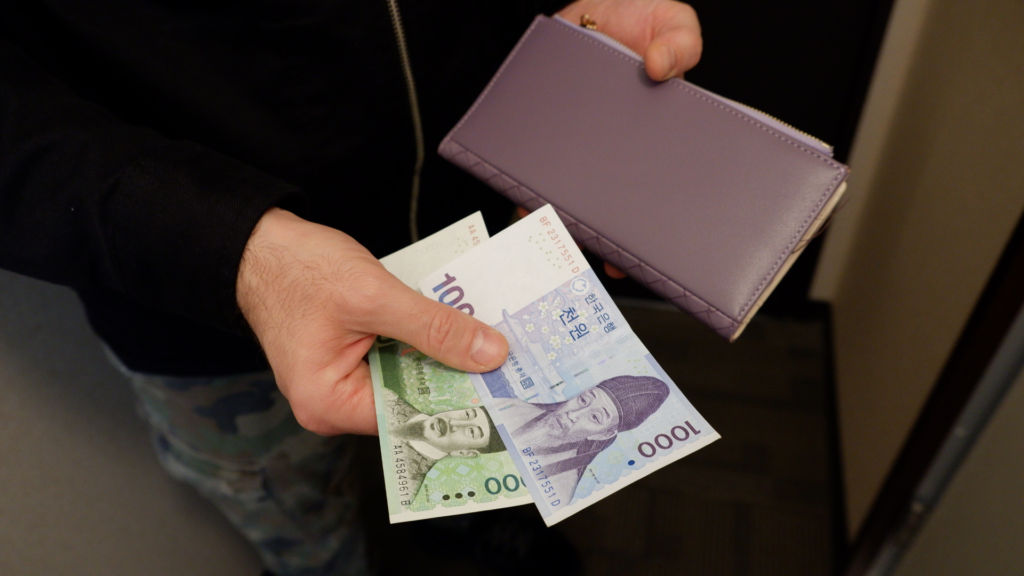
Your ARC card mobile payment journey starts here. The ARC serves as proof of your identity and long-term residency status. Telecom companies use your ARC number to verify your identity when you sign up for a postpaid phone plan. This verification is what makes you a trusted customer in their system, thereby granting you access to services like small payments. Without an ARC, you are generally limited to prepaid SIM cards, which do not support this feature.
How to Set Up Small Payments in Korea: A Step-by-Step Guide
Once you have your ARC and a postpaid phone plan, setting up small payments is relatively straightforward.
Linking Small Payments to Your Phone Plan (SKT, KT, LG U+)
The service might be activated by default, but it’s often something you need to request or enable.
Check Your Status: Log in to your mobile carrier’s app (e.g., T-World for SKT, My KT for KT, U+ Customer Center for LG U+) or visit their official website.
Navigate to Services: Look for a section named “소액결제” (small payment) or “콘텐츠 이용료” (content usage fee).
Activate and Set Limits: Here, you can activate the service if it’s off and, importantly, check or adjust your monthly spending limit. It’s wise to start with a lower limit and increase it only if needed.
Customer Support: If you struggle with the app’s language, you can call your provider’s English-speaking customer service line (dial 114 from your phone) or visit a local retail store with your ARC for assistance.
Navigating Popular Payment Apps and Services as a Foreigner
Once your phone’s small payment feature is active, you can link it to popular super-apps to make payments even easier.
Naver Pay (네이버페이) & Kakao Pay (카카오페이): These are two of the most popular payment apps korea for foreigners. In the app’s payment settings, you can add “휴대폰 결제” (mobile phone payment) as a payment method.
Payco: Similar to the others, Payco is widely accepted and allows you to register your phone number for small payments.
Small Payments for Prepaid Phone Users: What You Need to Know
A common point of confusion revolves around prepaid phone small payment korea. Unfortunately, because prepaid plans do not involve a monthly billing cycle or the same level of identity verification, they do not support the so-aek gyeol-je service.
Alternative for Prepaid Users: If you are on a prepaid plan, your best bet is to open a Korean bank account and link your debit card directly to payment apps like Naver Pay or Kakao Pay.
Pro Tip from Family-Paybank “Our goal at Family-Paybank is to remove financial barriers for foreigners in Korea. Understanding and setting up small payments is a crucial first step towards true financial independence and convenience here. It empowers you to participate fully in Korea’s digital economy without the immediate need for a local credit card.”
Curious? Click here https://www.family-paybank.com/
Where Can Foreigners Use Small Payments in Korea? (Usage Scenarios)
The versatility of small payments is one of its biggest strengths. Here are just a few examples of where you can use it:
Online Shopping and Digital Services
This is the most common use case. You can use it on major e-commerce sites like Coupang, Gmarket, and 11st. It’s also perfect for:
Food delivery apps (Baemin, Yogiyo)
Digital content (Melon for music, webtoons)
App Store and Google Play Store purchases
Convenience Stores and Offline Merchants
Many convenience store payment korea foreign options include small payments. Major chains like CU, GS25, and 7-Eleven often accept phone-based payments (through apps like Naver Pay linked to your phone bill) for everyday items.
Utilities, Public Transport, and Other Daily Necessities
While you can’t pay your rent with it, small payments are great for:
Public transport payment korea foreigner: You can use apps to top up your T-money or Cashbee transportation card and charge it to your phone bill.
Paying for certain gaming services or monthly subscriptions.
Covering small utility bills in some cases.
Overcoming Common Challenges and Limitations
While powerful, the system isn’t without its quirks. Here’s how to handle common issues.
Understanding and Managing Payment Limits
Every user has a monthly limit set by their telecom provider. This is a fraud-prevention measure. If a payment fails, the first thing you should check is whether you’ve exceeded your monthly small payment limits in Korea. You can view your usage and remaining balance in your carrier’s app.
Language Barriers and Accessing Customer Support
If you encounter an error message in Korean, use an app like Google Lens or Papago to translate it instantly. When calling customer service, specifically ask for an English-speaking representative.
Troubleshooting Failed Payments
A payment can fail for several reasons:
You’ve hit your monthly limit.
The service is not activated on your account.
The specific merchant does not accept small payments for certain items.
There’s a temporary system error with your provider.
Navigating Complex Financial Services: A Note on ‘Credit Card Cashing’
As you navigate financial options in Korea, you might come across terms for services that allow you to get immediate cash. One such service is 신용카드 현금화, which involves using your credit card limit to obtain physical cash through various methods. While these services exist, it’s vital for foreigners to understand the terms, fees, and implications fully before considering them.
Security Tips for Foreigners Using Small Payments
Beware of “Smishing” (스미싱): This is a common scam where you receive a text message with a malicious link.
Set a PIN: Secure your payment apps with a PIN or biometric authentication.
Monitor Your Bill: Regularly check your phone bill for any unauthorized charges.
Small Payments vs. Other Options: A Brief Comparison for Foreigners
| Payment Method | Pros for Foreigners | Cons for Foreigners | | Small Payments | Easy to access with an ARC & postpaid plan; no credit history needed. | Lower spending limits; not available for prepaid users. | | Korean Credit Card | Higher limits; widely accepted; offers reward points. | Very difficult to obtain without a specific visa type and proof of income. | | Cash | Universally accepted; no setup required. | Inconvenient for online shopping; risk of loss or theft. |
Conclusion: Your Key to Financial Convenience in Korea
For foreigners in Korea, understanding and utilizing the small payment system is a significant step towards a more integrated and convenient life. It bridges the gap left by the difficulty of obtaining a credit card and unlocks the full potential of Korea’s dynamic digital economy. By securing an ARC and a postpaid phone plan, you gain access to a powerful tool that simplifies everything from online shopping to your daily commute.
Have more questions about managing payments or finances as a foreigner in Korea? Connect with our expert support team for personalized assistance.