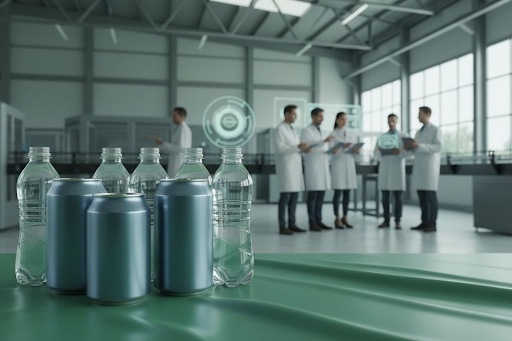
The beverage industry stands at a pivotal moment in its environmental journey. As regulatory pressures intensify and consumer expectations evolve, manufacturers across the globe are fundamentally rethinking their approach to packaging. The year 2026 marks a significant acceleration in sustainable practices, driven by technological innovation, circular economy principles, and an increasingly sophisticated understanding of lifecycle impacts.
For beverage producers navigating this landscape, the challenge extends beyond mere compliance. Forward-thinking companies are discovering that sustainable packaging strategies deliver tangible competitive advantages, from reduced operational costs to strengthened brand loyalty among environmentally conscious consumers.
Lightweighting and Material Innovation
Material reduction continues to dominate sustainability conversations in 2026, with lightweighting technologies achieving remarkable advances. Modern aluminium cans now use up to 40% less material than their counterparts from a decade ago, whilst maintaining structural integrity and shelf appeal. Glass manufacturers have similarly pushed boundaries, developing bottles that are significantly lighter without compromising durability during filling, transport, and retail handling.
Beyond weight reduction, material innovation is reshaping what sustainable packaging looks like entirely. Bio-based plastics derived from agricultural waste, seaweed-based films, and paper-based barrier solutions are moving from pilot programmes to commercial-scale deployment. These alternatives address growing concerns about petroleum-based packaging whilst meeting stringent food safety requirements.
European manufacturers have emerged as leaders in this space, investing heavily in research and development to create filling and packaging equipment compatible with these novel materials. Their engineering expertise ensures that sustainability gains are not offset by increased breakage, spillage, or production inefficiencies.
Circular Economy Integration and Closed-Loop Systems
The linear take-make-dispose model is rapidly becoming obsolete in beverage packaging. Deposit return schemes have expanded across Europe, North America, and Asia-Pacific regions, creating robust collection infrastructure that feeds recycling operations with high-quality feedstock. In 2026, several major markets report aluminium can recycling rates exceeding 90%, demonstrating what coordinated policy and industry action can achieve.
Closed-loop systems are gaining particular traction among premium beverage brands. These programmes see manufacturers taking direct responsibility for packaging recovery, often partnering with specialist recyclers to ensure materials return to beverage-grade quality. The economic case has strengthened considerably as virgin material costs fluctuate and recycled content commands premium positioning with retailers and consumers alike.
- Extended producer responsibility legislation now covers over 60% of global beverage markets
- Recycled content mandates are driving investment in food-grade recycling infrastructure
- Digital watermarking and smart packaging enable precise sorting and material tracking
- Refillable container programmes are experiencing renewed growth in both on-trade and retail channels
Energy Efficiency in Production and Filling Operations
Sustainable packaging extends well beyond the container itself. The energy consumed during production, filling, and distribution represents a substantial portion of any beverage product’s carbon footprint. Consequently, manufacturers are scrutinising every stage of their operations for efficiency gains.
Modern filling lines incorporate sophisticated energy recovery systems, capturing heat from pasteurisation processes and redirecting it to pre-warming or cleaning operations. Variable speed drives on pumps and conveyors adjust power consumption to actual production demands rather than running at constant maximum capacity. These incremental improvements compound significantly across high-volume operations running multiple shifts daily.
European equipment manufacturers have distinguished themselves through engineering excellence in this domain. Their filling systems, canning lines, and bottling equipment (https://stm-pack.com/machines-categories/canning-machines/) (https://stm-pack.com/machines-categories/bottling-machines/) consistently deliver superior energy performance whilst maintaining the precision and reliability that beverage producers require. For companies evaluating capital equipment investments, these manufacturers represent a quality option that aligns operational efficiency with sustainability objectives.
Water Stewardship and Resource Conservation
Water usage in beverage production has attracted increasing scrutiny from regulators, investors, and consumers. Leading producers now report water-to-product ratios that would have seemed impossible a generation ago, achieved through systematic process optimisation and water recycling technologies.
Cleaning-in-place systems have evolved to dramatically reduce water consumption whilst maintaining hygiene standards essential to food safety. Membrane filtration allows process water to be treated and reused multiple times before final discharge. Some facilities in water-stressed regions have achieved near-zero liquid discharge, treating and recycling virtually all water used in production.
Looking Ahead: The Convergence of Sustainability and Profitability
Perhaps the most significant shift in 2026 is the growing recognition that sustainability and profitability are not opposing forces. Reduced material usage lowers input costs. Energy efficiency cuts utility bills. Circular economy participation creates new revenue streams from recovered materials. Strong environmental credentials open doors to retailers and consumers who increasingly factor sustainability into purchasing decisions.
For beverage producers evaluating their packaging strategies, the path forward requires investment in both technology and expertise. Partnering with equipment suppliers who understand sustainable production—particularly the experienced European manufacturers who have pioneered many of these advances—provides a foundation for success in an industry where environmental performance is becoming inseparable from commercial performance.
The trends driving change in 2026 are not temporary adjustments but fundamental transformations in how beverages are packaged, filled, and delivered to consumers. Companies that embrace this reality position themselves for long-term success in a market where sustainability has become a baseline expectation rather than a differentiating feature.
Stay in touch to get more updates & news on Tribune!