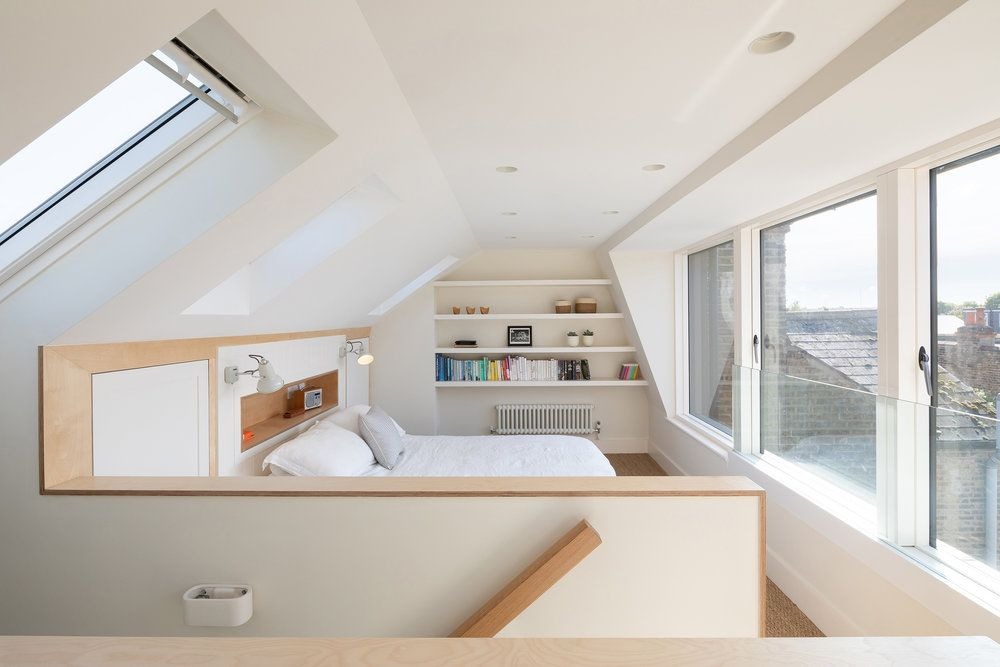
A mansard loft conversion is the premium approach to adding space in Kensington and Chelsea. Instead of working within existing roof constraints, you rebuild the roof entirely. You create a mansard roof with vertical walls at the top. Suddenly you have full-height rooms where sloped roof previously limited space.
Understanding how a mansard loft conversion actually works, or learning what planning rules apply specifically in Kensington and Chelsea, helps you see whether this approach works for your property. If you want to know more about costs and design options for mansard conversions in these prestigious neighborhoods, or understand why this approach is popular with high-end London properties, you’ll see why mansard conversions represent a significant investment that transforms properties substantially. A mansard isn’t just an extension. It’s a complete roof redesign.
How a Mansard Loft Conversion Works
A mansard roof has a distinctive shape. The lower section is steep or nearly vertical. The upper section is shallow or flat. This creates usable space at the top where traditional pitched roofs slope down to nothing.
In a mansard loft conversion, you remove the existing roof structure. You build a new mansard roof. The vertical section creates full-height walls. The top section becomes the roof.
This creates full headroom across much of the roof space. You’re not dealing with sloped ceilings anymore. You have standard room heights. Standard headroom. Standard functionality.
The mansard approach differs from dormer conversions. Dormers extend out from the existing roof. Mansards rebuild the roof entirely. Mansards create more internal space because the vertical walls extend across the full width.
In Kensington and Chelsea, many Victorian and Edwardian properties have pitched roofs. A mansard conversion transforms these roofs into functional space-creating structures.
To know more about the mansard Loft conversion architect in Chelsea.
The engineering is complex. You need proper structural support. You need new roof trusses. You need waterproofing. You need ventilation. This isn’t DIY territory. This is professional work.
The external appearance changes significantly. Your property looks different with a mansard. Some people see this as modernization. Some see it as altering a period property. That matters for planning in these neighborhoods.
Planning Rules in Kensington & Chelsea for Mansard Extensions
Planning is where mansard conversions get tricky. A mansard fundamentally changes your building’s appearance. The Planning committee pays attention.
Kensington and Chelsea has Conservation Areas throughout. Most properties in these areas face Conservation Area restrictions. A mansard changes the building’s character significantly. Getting Planning Permission is not guaranteed.
Some mansards get approved. But they need to be designed carefully. They need to respect the building’s period style. They need to complement the neighborhood character.
Listed buildings in Kensington and Chelsea face even stricter restrictions. A mansard on a listed building almost always requires Listed Building Consent. Approval isn’t guaranteed.
The design matters enormously. A sympathetic mansard designed to work with the building’s existing character has better approval odds than one that looks like it was added as an afterthought.
Brick and materials need to match. The mansard shouldn’t look like a different building stuck on top. It should look intentional.
Building Regulations applies regardless. The mansard structure needs to be sound. Insulation needs to meet standards. Ventilation needs to work. Fire safety needs to be addressed.
Extension Architecture knows Kensington and Chelsea planning committees well. They understand what gets approved. They design mansards that respect these neighborhoods while delivering functional space.
Single vs Double Mansard Loft Conversions
Mansard conversions come in different configurations.
Single mansard – Only one side of the roof gets the mansard treatment. Usually the back/rear. Minimal visual impact on the front of the building. Often easier to get Planning Permission.
Double mansard – Both front and back get the mansard treatment. Creates more space. More dramatic visual change. Harder to get Planning Permission. More expensive.
Full mansard – All sides get the treatment. Maximum space created. Maximum visual transformation. Planning Permission very difficult. Most expensive option.
In Kensington and Chelsea, single mansards on the rear are most common. They add space while minimizing visual impact on the street front. This approach often gets Planning Permission approval more easily.
A double or full mansard creates more space but changes the building’s appearance dramatically. This is only appropriate for properties where such transformation aligns with the neighborhood character.
Cost of a Mansard Loft Conversion in London (2025 Estimates)
Mansard conversions are expensive. You’re rebuilding your roof. You’re creating significant new structure. Costs are substantial.
In Kensington and Chelsea, budget 40000 to 80000 for a single rear mansard. That’s construction only. Add professional fees, Planning, Building Regulations.
A double mansard might cost 70000 to 120000. A full mansard might cost 100000 to 160000 or more.
These are 2025 prices. Costs are high because of structural complexity, material quality, and the specialized expertise required.
For a typical Kensington and Chelsea property, a single rear mansard probably runs 50000 to 100000 total project cost including all fees and approvals.
What’s included? Roof structure. Insulation. New floors. Walls. Windows. Doors. Electrical. Plumbing. Finishes. Building Regulations. Professional fees.
What affects cost? Size of the mansard. Complexity of design. Existing structure condition. Material quality. Finishes chosen.
Properties in pristine condition with straightforward structure cost less. Properties with complications or requiring premium finishes cost more.
Design Inspiration: Mansard Loft Conversion Pictures & Ideas
Successful mansard conversions in Kensington and Chelsea share certain design principles.
Sympathetic to period – The mansard respects the building’s original character. Materials. Proportions. Details. It looks like it belongs.
Quality finishes – Kensington and Chelsea properties deserve quality. Premium materials. Quality finishes. This isn’t budget construction.
Integrated design – The mansard isn’t added as an afterthought. It’s designed as part of the whole building. Proportions work. Details align.
Functional layout – Space is organized sensibly. Multiple rooms possible. Bathrooms. Storage. The mansard creates living space, not just attic space.
Modern amenities – Despite period respect, modern systems work inside. Heating. Cooling. Technology. Modern living with period charm.
Outdoor connection – Sometimes a mansard includes roof terrace space. Adding outdoor living alongside indoor.
Natural light – Windows positioned for light and views. Skylights bringing in daylight. The space feels bright despite being at roof level.
In Kensington and Chelsea specifically, successful mansards often:
- Respect Victorian or Edwardian character
- Use materials matching existing building
- Maintain proportions consistent with neighborhood
- Include luxury finishes appropriate to the area
- Create multiple functional rooms
- Provide ensuite bathrooms if bedrooms
- Include storage appropriate to luxury living
Why Kensington and Chelsea Properties Choose Mansards
Kensington and Chelsea properties are expensive. Adding space through mansard conversion protects the property’s value. You’re not expanding outward. You’re expanding upward within your own building.
For terraced properties with no garden space, a mansard creates valuable interior space. For properties where extensions aren’t possible, a mansard is the solution.
The lifestyle benefit is significant. Full-height rooms at roof level. Views across London. Premium space in premium neighborhoods.
Resale value increases substantially with a quality mansard. These neighborhoods value quality space. A well-designed mansard increases property value significantly.
Why Extension Architecture Recommends Professional Design
Mansard conversions in Chelsea are complex. Planning is difficult. Design needs to be sympathetic to these neighborhoods. Construction is specialized.
This isn’t a project for amateur approaches. This requires experienced architects. Experienced engineers. Experienced project management.
Extension Architecture specializes in mansard loft conversions in Chelsea. They know what these neighborhoods expect. They know what Planning committees approve. They design mansards that respect character while delivering luxury space.
For your Kensington and Chelsea property, consider whether a mansard works. Get professional assessment specific to your building. Understand costs and timeline. Design with luxury and character in mind.
A mansard loft conversion is a significant investment. It’s also a transformation that can dramatically improve your property’s value and your quality of life in one of London’s most prestigious neighborhoods.