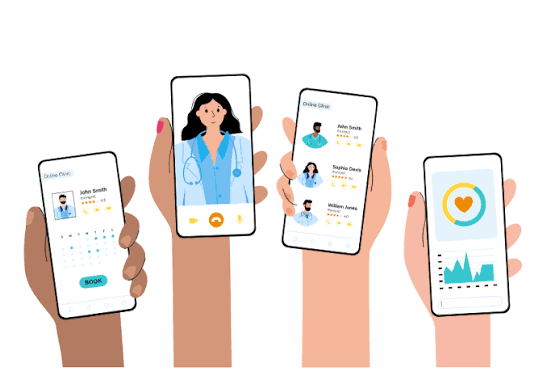
Healthcare organizations are adopting mobile technology to make medical services more accessible, improve communication, and simplify daily operations. From booking appointments to accessing medical records, mobile applications help patients connect with healthcare providers without unnecessary delays. A reliable healthcare mobile app development company can help hospitals, clinics, and healthcare startups build digital solutions that address these needs while protecting sensitive patient information.
As patients become more comfortable using digital services, healthcare businesses have an opportunity to improve their services through well-designed mobile applications. The right solution can support both patient convenience and the administrative processes that keep healthcare organizations running efficiently.
Why Healthcare Businesses Need Mobile Applications
Traditional healthcare processes often require patients to make phone calls, visit facilities for routine updates, or wait for information from medical staff. These processes can create additional work for administrative teams and make accessing care more complicated.
Mobile applications provide a convenient way to manage many of these activities. Patients can schedule appointments, receive reminders, view available medical information, and communicate with their healthcare providers through their smartphones.
For healthcare businesses, mobile technology can also improve appointment management, reduce repetitive administrative tasks, and provide patients with more convenient ways to stay connected with their care teams.
However, successful healthcare applications require more than a good interface. They must account for privacy, security, accessibility, and integration with existing healthcare systems.
Essential Features of Healthcare Mobile Apps
The features of a healthcare application should reflect the needs of its intended users. A patient-facing application will have different requirements from a hospital operations platform or a remote monitoring solution.
1. Appointment Scheduling
Appointment scheduling allows patients to find available time slots, book consultations, and receive confirmations. Automated reminders can help patients remember upcoming visits and make changes when necessary.
Healthcare providers can also use scheduling tools to organize appointments and reduce the administrative effort associated with managing bookings.
2. Patient Portals and Medical Records
Patient portals give users convenient access to information such as appointment histories, laboratory results, prescriptions, and other records made available by their providers.
When connected to an electronic health record (EHR) system, an application can help authorized users access relevant information without maintaining disconnected records. Integrations should be designed around appropriate permissions, data accuracy, and the healthcare organization’s existing systems.
3. Telemedicine and Video Consultations
Telemedicine features allow patients and healthcare professionals to communicate remotely when virtual care is clinically appropriate. Applications can combine video consultations with appointment scheduling, secure messaging, and post-visit instructions.
This approach can make follow-up appointments more convenient and help providers serve patients who have difficulty traveling to a healthcare facility.
4. Medication and Appointment Reminders
Notifications can remind patients about appointments, medication schedules, and care instructions. These features can support consistent routines and help patients stay informed about their planned care.
Applications should provide appropriate notification settings and avoid displaying sensitive medical information where it could be seen by unauthorized people.
The Importance of Security in Healthcare App Development
Healthcare applications may process personal information, medical histories, prescriptions, and other sensitive data. Protecting this information should be a priority throughout the development process.
For applications handling protected health information in the United States, developers and healthcare organizations need to assess applicable HIPAA requirements and their respective responsibilities. Security measures may include data encryption, multi-factor authentication, role-based access controls, secure APIs, audit logs, and regular security testing.
Third-party services also require careful evaluation. Businesses should understand how vendors collect, process, store, and access patient information before integrating their products.
Compliance should not be treated as a final step before launch. Planning for privacy and security from the beginning helps teams make better architectural decisions and avoid expensive changes later.
How AI Is Changing Healthcare Applications
Artificial intelligence is creating new opportunities to improve healthcare workflows. Depending on the intended use, AI-powered features can help organize information, automate administrative tasks, and support communication between patients and healthcare teams.
For example, an application might use AI to categorize incoming patient requests, assist with appointment inquiries, summarize information for authorized staff, or help clinicians prepare documentation for review.
Remote patient monitoring is another important area. Applications can receive information from connected health devices and display relevant measurements to patients or care teams. These systems need reliable data handling, carefully designed alerts, and clear procedures for responding to concerning readings.
AI should be implemented with appropriate validation, privacy protections, and human oversight. It should not be presented as a replacement for professional medical judgment.
Choosing a Mobile App Development Company Dallas Businesses Can Work With
Healthcare organizations need development partners who understand both software engineering and the practical requirements of medical services. When evaluating a mobile app development company Dallas businesses can consider, it is important to assess technical experience, communication, project planning, and the ability to build secure applications.
Start by identifying the problem the application needs to solve. A clinic may want to reduce scheduling calls, while a healthcare startup may need a telemedicine platform or a remote patient monitoring product. A clear project scope makes it easier to compare development proposals and prioritize essential features.
Next, review the development team’s experience with iOS and Android applications, backend systems, API integrations, cloud infrastructure, and healthcare data security. If the application must connect with an existing EHR or hospital information system, ask how the team plans to handle interoperability and testing.
A development partner should also explain the expected timeline, project milestones, maintenance requirements, and ongoing costs. These details help healthcare businesses make informed decisions before committing to a project.
Appicoders works with businesses to develop mobile applications and software solutions based on their operational goals. Healthcare organizations can explore potential solutions for patient engagement, appointment management, medical workflows, and connected digital services.
Steps to Build a Successful Healthcare Mobile App
A structured development process helps reduce uncertainty and keeps the project focused on its intended users.
Step 1: Define the project requirements. Identify the target users, their main challenges, and the outcomes the application should support.
Step 2: Prioritize the essential features. Begin with the functions that solve the most important problems. Additional features can be introduced after the initial version has been tested.
Step 3: Design the user experience. Create clear navigation and accessible interfaces for patients, clinicians, and administrators. Consider users with different levels of technical experience.
Step 4: Develop and integrate the application. Build the mobile interface, backend services, and required connections to existing systems. Establish security controls and data-handling procedures throughout development.
Step 5: Test before launch. Evaluate functionality, performance, accessibility, data protection, and integration reliability. Test common workflows as well as failure scenarios.
Step 6: Maintain and improve the product. Monitor application performance, address user feedback, update dependencies, and review security as the product evolves.
Conclusion
Healthcare mobile applications can help providers improve patient communication, simplify administrative workflows, and make selected medical services more accessible. Their success depends on understanding user needs, protecting sensitive information, and connecting the application with the systems healthcare teams already use.
Whether a healthcare organization needs a patient portal, telemedicine platform, or connected monitoring solution, choosing an experienced development partner is an important step toward building a useful product.
Appicoders can help businesses plan and develop mobile software around their requirements. Contact Appicoders to discuss your healthcare app idea, essential features, integration needs, and development timeline.