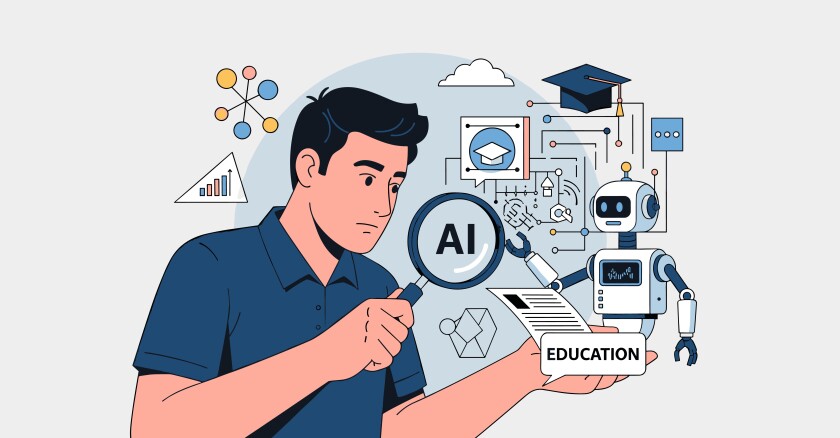
Artificial intelligence (AI) is changing education by helping teachers personalize instruction, provide faster feedback, and identify areas where students need additional support. However, not every AI tool improves learning outcomes.
Schools and educators need to distinguish between technology that makes tasks easier and solutions that genuinely help students understand, retain, and apply knowledge.
The most effective uses of AI in education focus on improving student learning, supporting teachers, and making educational resources more accessible.
Personalized Learning That Adapts to Students
Tommy Mello, founder of A1, shares: “One of the most promising applications of AI in education is personalized learning. Traditional classrooms often require teachers to support students with different abilities, learning speeds, and educational needs at the same time.
AI-powered learning platforms can analyze student responses, identify knowledge gaps, and recommend exercises based on individual progress. For example, a student struggling with algebra may receive additional practice questions, while another who understands the material can move on to more advanced concepts.
This approach can make learning more targeted and help students practice specific skills. However, teachers still need to monitor progress to ensure that recommendations match each student’s needs.”
Faster Feedback Helps Students Correct Mistakes
Feedback is essential for effective learning, but teachers may not always have enough time to review every assignment immediately. AI-powered educational tools can provide quick feedback on practice exercises, writing structure, and certain types of assessments.
Students can use this feedback to recognize mistakes, review difficult concepts, and try again before misconceptions become habits.
For example, an AI tutor might explain why a mathematical answer is incorrect or suggest improvements to the structure of an essay. The greatest benefit comes when feedback explains the reasoning behind a mistake rather than simply providing the correct answer.
Teachers should still review important assessments because AI-generated feedback can sometimes be inaccurate or incomplete.
AI Tutors Provide Additional Learning Support
Co-founder of Spokeo, Harrison Tang, says: “AI tutors can give students another way to ask questions and practice challenging concepts outside classroom hours. They can explain topics in different ways, generate examples, and guide learners through problems at their own pace.
This can be particularly useful when students need extra practice but cannot access immediate assistance from a teacher. AI tutors may also help learners build confidence by allowing them to ask questions without feeling embarrassed.
However, students can receive incorrect or misleading explanations from AI systems. Educators should encourage learners to verify important information and use AI as a learning aid rather than an unquestioned source of truth.”
Teachers Use AI to Spend More Time Teaching
AI can also improve education by reducing administrative work. Teachers may use AI tools to draft lesson plans, generate practice questions, adapt reading materials, and create examples for different ability levels.
When these tasks take less time, educators can devote more attention to classroom discussions, individual support, and student engagement.
The goal should not be to replace teachers with AI. Human educators provide context, encouragement, judgment, and relationships that automated systems cannot fully reproduce. Teachers should review AI-generated materials for accuracy, relevance, and age appropriateness before using them.
Accessibility Tools Support Different Learning Needs
AI-powered accessibility tools can make educational materials easier for more students to use. Speech-to-text, text-to-speech, automated captions, translation, and reading assistance can help learners engage with content in different ways.
For students with disabilities or language barriers, these tools may reduce obstacles to participation and improve access to educational resources.
Schools should evaluate accessibility features based on students’ actual needs, while ensuring that personal information is handled responsibly. Technology works best when combined with appropriate teaching strategies and individualized support.
Measure Learning Outcomes, Not Just AI Usage
A major challenge for schools is determining whether AI genuinely improves learning. Increased platform usage, faster assignment completion, or higher student engagement does not automatically mean that students understand a subject better.
Educators should evaluate measurable outcomes, including knowledge retention, assessment performance, critical thinking, and the ability to apply concepts independently.
Schools can compare student progress before and after introducing an AI tool and gather feedback from both teachers and learners. They should also monitor whether students become overly dependent on automated answers instead of developing their own problem-solving skills.
AI in education can improve personalized learning, feedback, tutoring, accessibility, and teacher productivity. However, its value depends on how effectively these tools support genuine understanding rather than simply speeding up educational tasks.
Schools should choose AI solutions based on clear learning objectives, reliable performance, and measurable outcomes. By combining useful technology with teacher guidance and critical thinking, educators can make AI a practical tool for improving learning without losing the human connection that makes education effective.