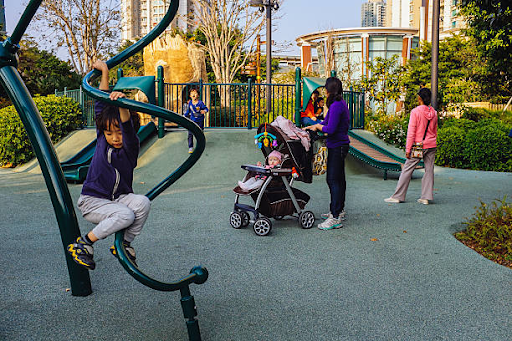
The act of selecting the appropriate mobility equipment for a growing child is the most significant decision in the life of a family. It can change everyday life whether the child is about to experience their first visit to the park or they have special mobility requirements and can find a solution that will change over time, size and ability. Modern mobility aids such as special needs strollers and pediatric wheelchairs are developed today not only to help move but also to be able to move with confidence, freedom and connection with their family.
The restaurant will just thrive on high-quality restaurant supplies like restaurants to offer uniformity and comfort, and similarly, families will need to have flexible mobility solutions to accommodate altered lifestyles and developmental requirements.
Understanding the Changing Mobility Needs of Growing Kids
Each new period of childhood suggests new challenges and milestones. The same methods that worked with a three-year-old are not necessarily going to work with a ten-year-old with more developed mobility or support requirements. This is why parents and caregivers are currently concerned with versatility—in search of mobility that develops along with the children.
Lightweight special needs strollers make it easier to school run and on the weekend outing. These designs have supportive seating, adjustable frames, and comfort appeal which adapts to the growth of a child. In the meantime, pediatric wheelchairs are increasingly becoming more adaptable in that the families can change the seat depth, back height, and wheel arrangement as children gain strength and independence.
It is not about mobility but inclusion. Parents would desire that their children should participate in things, go to school, and play in the playgrounds at will.
Innovation and Adaptability: The New Standards in Mobility
Manufacturers are reacting to this need through innovation. Similarly, modern restaurant supplies are improving to achieve the sustainability and efficiency objectives, pediatric mobility equipment is also improving with the aid of technology and considerate design.
The modern day pediatric wheelchairs are based on posture, safety, and independence. They combine functionality with style using ergonomic seating systems, lightweight materials and foldable frames. They can be easily carried by families in cars, carried by airplanes or through narrow places at home or school.
In the same manner, the special needs strollers are no longer clumsy and clinical. They have breathable materials, shock absorbing wheels and nap or long outing reclines. The design development also ensures that the ability to move around is comfortable to children and convenient to parents; just as ergonomic restaurant supplies enhance duties in the kitchen.
Emotional Connection: Why Comfort and Confidence Matter
Mobility is not limited to physical movement, but it is emotional freedom. Parents understand that when children are relaxed and encouraged, they will have a lot of confidence. An adapted pediatric wheelchair is one that promotes self-sufficiency and a universal special needs stroller is one that helps families to have daily adventures collectively. Lightweight special needs strollers make school runs and weekend outings simpler. Modern pediatric wheelchairs prioritize posture, safety, and independence.
These devices do not just represent accessibility but are a symbol of power. Similar to a chef that can rely on the supplies of a trusted restaurant to offer an excellent meal at all times, families rely on mobility solutions that are quality and efficient to make sure that their children could enjoy life and be happy.
The Role of Technology in Growing Mobility Solutions
Intelligent technology is changing the way mobility helps to be functional and adapt. Modular add-ons, digital tracking systems and smart braking devices have been added to new pediatric wheelchairs. With the help of apps, parents can carefully keep track of usage, set the settings, and take care of their child as well as making sure they are comfortable and safe.
In the meantime, special needs strollers are incorporating adjustable harness systems and lightweight aluminum frames based on some other industrial innovations. The emphasis is on flexibility of which a single investment can be extended to several growth phases, just as durable and sustainable restaurant supplies save on wastage and long term expenditure in the hospitality industry.
Practical Considerations for Families Choosing Mobility Equipment
There are several factors that should be taken into account by the parents when selecting the right mobility aid:
- Growth Flexibility: Does the equipment increase in height, width or depth of seat?
- Portability: Lightweight and easily foldable/portable?
- Comfort and safety: Does it support the proper posture and have secure harnesses?
- Lifestyle fit: Will it work both in and out the house as well as when traveling?
The most appropriate mobility solutions would be integrated into the routine of the family so that children can be freely involved in the social and recreational activities.
Special needs strollers are the best solution to families who require the convenience of portability and comfort simultaneously, whereas the pediatric wheelchairs provide them with long-term stability and customization in case they need to build independence.
Beyond Mobility: Building a More Inclusive World
Mobility tool development is associated with a more general inclusivity movement. Parks, communities, and schools are becoming more accessible and all children (whatever their physical ability) have equal access to learning and recreation.
This development is an indication of a globalized mentality that cherishes empathy, design, and innovation. According to the same principle that sustainable food sources and restaurants are redefining efficiency and responsibility in the food sector, adaptive mobility equipment is transforming the ways in which the society cares about families and children with special needs.
Conclusion
The selection of mobility solutions among growing children is a pragmatic and sentimental choice. Families are after products that are flexible, safe, and comfortable enough to allow children to move, explore and survive in all stages of life.
The contemporary special needs strollers and pediatric wheelchairs are not mere medical equipment; they represent open doors to independence and inclusion. These tools are designed through innovative design concepts and considerate engineering, mobility can grow as gracefully as an adult can grow up.
Like state of the art restaurant supplies enable a chef to provide a better dining experience, new mobility technologies enable families to go beyond the constraints, collectively.
Keep an eye for more latest news & updates on Tribune!