If you’ve spent any time trying to figure out why some websites consistently rank well while others seem to spin their wheels, you’ve probably stumbled across the acronym E-E-A-T. It shows up in SEO conversations constantly. But for something so frequently mentioned, it’s surprisingly misunderstood.
Let’s clear that up.
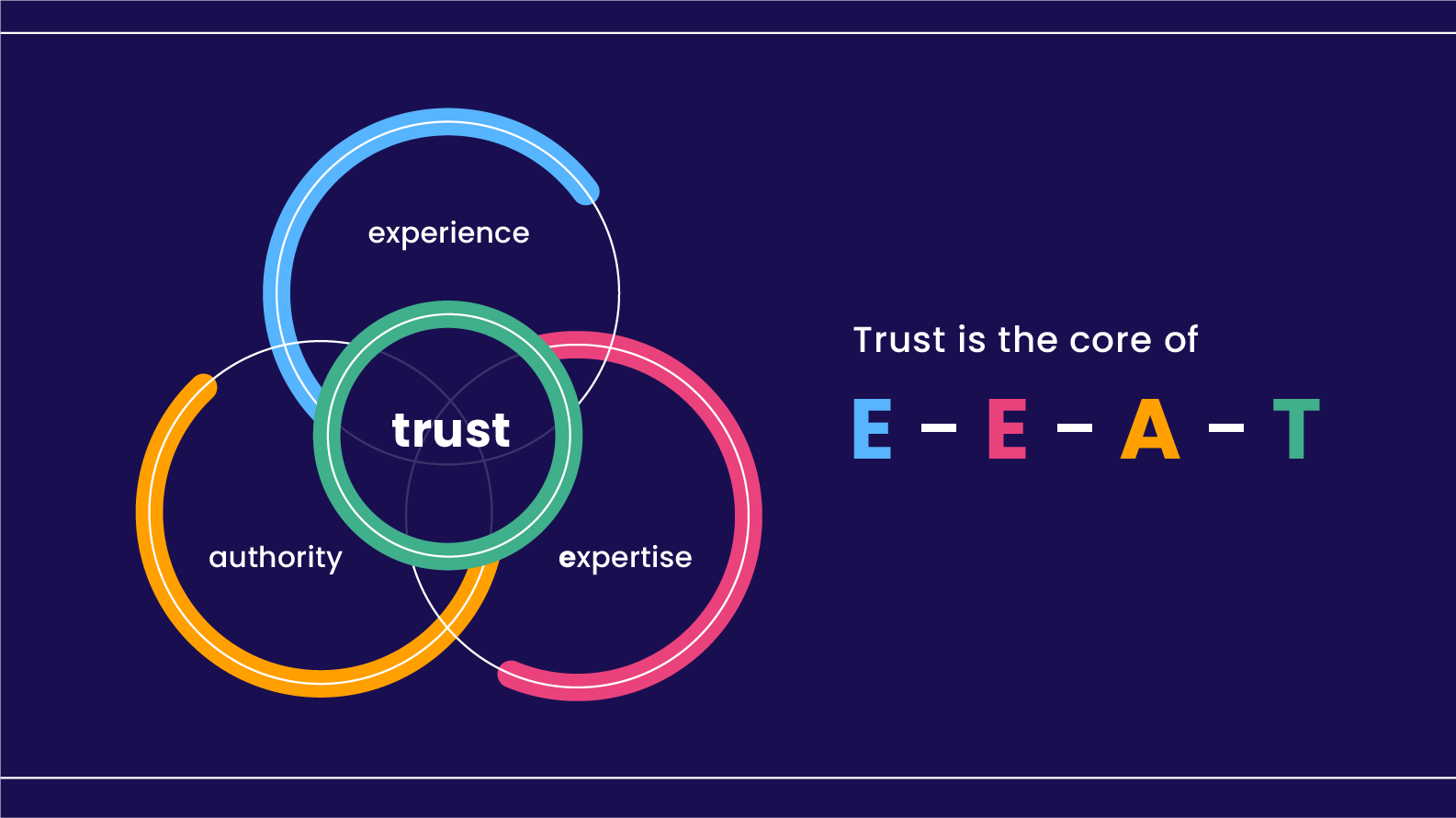
E-E-A-T stands for Experience, Expertise, Authoritativeness, and Trustworthiness. It’s the framework Google uses to evaluate whether a piece of content and the person or business behind it actually deserves to rank. Not just whether it has the right keywords, or enough backlinks, or a certain word count. But whether it represents something real, credible, and genuinely useful.
In a web increasingly flooded with AI-generated content and questionable sources, that framework matters more now than it ever has.
Where E-E-A-T Comes From
Google doesn’t rely solely on algorithms to evaluate content quality. It also uses a team of human quality raters who follow detailed guidelines when assessing search results. E-E-A-T comes from those guidelines. It’s Google’s attempt to articulate what actually makes content good, and it gives us a pretty clear window into what the algorithm is ultimately trying to reward.
The original framework was E-A-T, which stood for Expertise, Authoritativeness, and Trustworthiness. In late 2022, Google added a second E for Experience, a meaningful update that signals something important: it’s not enough to know about something. Google now wants to see that you’ve actually lived it.
That distinction matters a lot for small and mid-size businesses.
What Each Letter Actually Means
Experience is about first-hand knowledge. Has the person writing this actually done the thing they’re describing? A restaurant owner writing about running a kitchen has something a content farm cannot replicate. A financial advisor sharing what they’ve seen work for real clients has depth that generic advice simply doesn’t. Google is looking for signals that the content comes from someone who has been in the room, not just someone who has read about it.
Expertise refers to the depth of knowledge someone brings to a topic. For certain industries, particularly health, legal, and financial content, Google holds this to an especially high standard. But even outside those spaces, expertise shows up in the specificity of your answers, the quality of your reasoning, and whether your content actually resolves someone’s question or just dances around it.
Authoritativeness is largely about how others in your space perceive you. Are credible websites linking to your content? Is your name cited in industry conversations? Do journalists or bloggers reference you as a source? Authority builds over time and it doesn’t happen by accident. It’s the cumulative result of putting out consistently strong work and earning recognition for it.
Trustworthiness is the foundation everything else rests on. It includes things like having accurate information, a secure website, transparent authorship, clear contact information, and honest business practices. A site with excellent expertise but a questionable checkout process or missing privacy policy is going to have a trust problem. And Google’s systems are increasingly good at picking up on it.
“E-E-A-T is really just Google trying to answer the same question your potential customers are asking: can I trust this business? The companies that build genuine authority, show their real expertise, and show up consistently are the ones the algorithm rewards. It’s not a trick. It’s just doing the work.” — Kimberly Hogate, Owner, SynchroniCITY SEO
Why It Matters More Right Now
The rise of AI content generation has made E-E-A-T signals more important, not less. When anyone can produce a polished-looking 1,500-word article in under a minute, the question of who is actually behind that content becomes critical. Google knows this. Its helpful content systems are designed specifically to surface content created for people, not just content optimized to perform in search.
What this means practically is that generic content is getting squeezed out. The stuff that’s winning is specific, credible, and clearly authored by someone with real knowledge and real stakes in what they’re saying.
That’s genuinely good news for businesses that have expertise worth sharing.
How to Strengthen Your E-E-A-T
You don’t need to overhaul your entire website overnight. But there are meaningful steps you can take right now.
Put real people behind your content. Author bios matter. If someone on your team wrote an article, say who they are, what their background is, and why they’re qualified to speak on that topic. A name and a face signal credibility in a way that anonymous content simply cannot.
Let your experience show. Write from what you’ve actually seen and done. Case studies, client stories, lessons learned from real situations in your own work, these carry weight that recycled general advice doesn’t. The more specific and grounded your content is, the more it signals genuine experience.
Earn mentions and links from credible sources. Getting featured in local news, contributing to industry publications, being cited by other reputable sites in your space, these are the kinds of signals that build authority over time. There’s no shortcut here, but the payoff compounds.
Make your site easy to trust. Secure hosting, a clear privacy policy, accurate business information, easy ways to get in touch. These details tell both Google and your visitors that you’re a legitimate operation. Don’t let them slip through the cracks.
Keep your information current. Outdated content, especially on topics where facts change, erodes trust. A quick review of older posts to make sure they still reflect current best practices is a worthwhile habit.
The Bottom Line
E-E-A-T isn’t a box to check or a score to game. It’s Google’s best attempt to measure what humans have always used to decide who to trust: real knowledge, demonstrated experience, a credible reputation, and honest dealing.
The businesses that take that seriously are the ones building search visibility that actually lasts. And in a landscape where shortcuts are getting harder to pull off, that kind of foundation is worth a lot.