Permitted development could be a useful shortcut for UK homeowners, allowing them to extend or make renovations without a full planning application. This falls under the broader planning system, with national rules determining what you can and can’t do to your house without formal approval, providing you meet certain restrictions.
What is permitted development?
Permitted development rights are a set of planning permissions granted by the government, rather than your local council, on an individual basis. These are the rights that allow you to undertake certain types of building work or alter how you use your home without the need for a full planning application, providing your project meets basic size, height, and location restrictions.
These rights cover common projects such as small additions, loft conversions, outbuildings, and various changes to windows, doors, or materials. Most of them apply to houses rather than apartments or maisonettes. Even if planning clearance is not required, you usually still need approval for Building Regulations to ensure the work is safe and energy-efficient.
When does permitted development apply to home projects?
Permitted development rights typically cover a single house that has not exhausted its allowance through previous extensions or outbuildings. The starting point will be the “original house,” defined as the property as it existed on 1 July 1948, or when it was first built, if later. The rules measure any new work from this baseline.
Some areas have further controls, and sometimes may have lost their PD rights. Properties in conservation areas, national parks, Areas of Outstanding Natural Beauty, or those affected by an Article 4 direction often have tighter controls and may be required to have full planning permission for works, which in other areas would not be required.
Common changes you can make without full planning
Many common projects are permitted development if they stay within limits regarding size and design. For example:
- Single-storey rear extensions that are within the limits of depth and height. Some may fall under the larger-home extension route with prior approval and neighbour consultation.
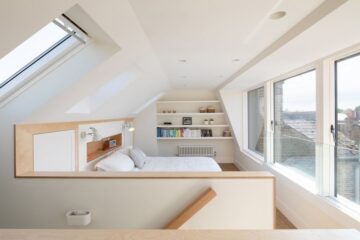
- The following do not require planning permission: Loft conversions which increase the roof volume within specific cubic-metre limits, do not include front roof slopes facing a highway, and are below ridge height for dormers.
- Single-storey side extensions, provided they are not wider than half the original house and do not exceed maximum height and eaves restrictions. This includes some conservatories, porches, garden rooms, and garage conversions, provided their external impact is small.
Outbuildings, such as garden offices or studios, may also be constructed under permitted development, provided that the development is ancillary to the principal house; there are specified height and area limitations, and these buildings are not used as separate dwellings. If an annexe is self-contained, with a full kitchen and bathroom, then it’s more likely to be considered a separate dwelling and may require planning permission.
How Extension Architecture guides you through the process
Specialist firms such as Extension Architecture will review your property and its planning history to explain whether your idea falls within permitted development or requires formal approval. They apply local laws and current national guidelines in designing projects to meet regulations wherever possible, reducing risk and delays.
Our services commonly comprise measured surveys, PD-compliant design options, and, where useful, applications for a Lawful Development Certificate. This provides you with documented confirmation from the council that the intended works are lawful. If the plans exceed the permitted development, then the same team can seamlessly transition into preparing a full planning application, complete with drawings and supporting statements.
Key limits and exceptions you should know
The following are critical limitations, even when relying on permitted development:
- The total number of additions (extensions and outbuildings) must not cover more than half the area around the original house. Extensions usually cannot extend in front of the main front elevation.
- Height is restricted for most PD extensions, including lower eaves next to boundaries. The majority of multi-storey or wrap-around schemes fall outside PD.
Specific rules also relate to balconies, raised platforms, and front-facing roof changes. Listed buildings almost always require separate listed building consent, regardless of the PD rules. Councils may withdraw or restrict PD rights under Article 4 directions, which means that what is permitted on one street may not be allowed on another.
Steps to check if your home qualifies
Before commencing work, a homeowner should follow a simple process:
Check basic restrictions: Use the Planning Portal and your council’s website to confirm that your property is a house and not an apartment, plus check whether it’s listed, in a conservation area, or is affected by an Article 4 directive.
- Compare your proposal with the official PD guidelines for outbuildings, lofts and extensions by looking at the depth, height, roof volume, and amount of garden space that could be covered.
- Check past additions and curtilage: Because the PD volume and area limits build up against the original house, consider any past extensions, conservatories, or large outbuildings.
- Take professional advice from an architect or planning expert to confirm whether the development is compliant, to fine-tune the design, and to advise whether prior approval, a Lawful Development Certificate, or full planning is the safest option.
- Building Regulations approval and records: Even when PD applies, engage building control, keep drawings and approvals, and store photos and certificates for future sales or remortgaging.
Knowing how permitted development works and doing a careful check of your project against the rules can allow you to create extra space more quickly while staying within the planning system.
In conclusion:
Permitted development rights allow UK homeowners a practical way to improve and expand their homes without the delays and complications of a full planning application. They make the renovation process much easier by allowing some extensions, loft conversions, and alterations within clear guidelines. Despite these advantages, it is important to understand restrictions and exceptions, especially if your home is in a conservation area, has already been extended, or may be affected by Article 4 directions. Consult experienced professionals and get the right certifications to make sure the work remains legal, continuing to be suitable for the future. Taking the time to check your permitted development status and follow the appropriate steps will allow you to create additional space and functionality while maintaining compliance with the planning system.