It usually starts with something tiny—a random tickle in your throat or a bit of congestion that lingers long after you’ve cracked open every window and washed the doona.
Meanwhile, right under your feet, there’s an entire microscopic neighbourhood thriving in your carpet fibres like it’s peak season, and no one told you the resort was fully booked.
So, if you’re ready to find out what’s really going on in your carpet and, more importantly, how to take control of it, let’s dive in.
Your Invisible Neighbours
Dust mites are microscopic organisms. They’re so small that you could stare at your carpet all day and still never spot one.
They’re not insects, parasites, or something that crawls across your skin at night. In fact, if you saw one magnified, you’d probably think it looks more like a miniature creature from a sci-fi movie.
Dust mites have absolutely no interest in us as a food source. What they do consume is shed human skin cells. To a dust mite, that’s an all-you-can-eat buffet.
Because they feed on what naturally settles around your home, they gravitate toward places that collect soft fibres and fine debris, like carpets, bedding, upholstery, and curtains.
Overall, if a surface is soft, comfortable, and collects tiny particles, dust mites see it as the perfect habitat.
The mites themselves aren’t harmful. The problem is what they leave behind. Their microscopic waste particles break down into dust, and when you walk across your carpet or even pull back the sheets, those particles can easily float into the air.
Small Creatures, Big Consequences
Even though the mites themselves keep to their own business, their waste particles are incredibly light. The moment you walk across your carpet, sit on the lounge, or even fluff a cushion, those particles can become airborne and end up in your airways.
For anyone with allergies, this can trigger these symptoms:
- Persistent sneezing;
- Itchy or watery eyes;
- A blocked or runny nose;
- Sinus pressure.
And here’s something many people don’t realise: these symptoms often get mistaken for seasonal hayfever, when in reality, it’s the mites causing chaos all year-round.
If you’ve got asthma, things can feel more serious. When allergen levels rise, your airways can tighten and become irritated, leading to more frequent flare-ups.
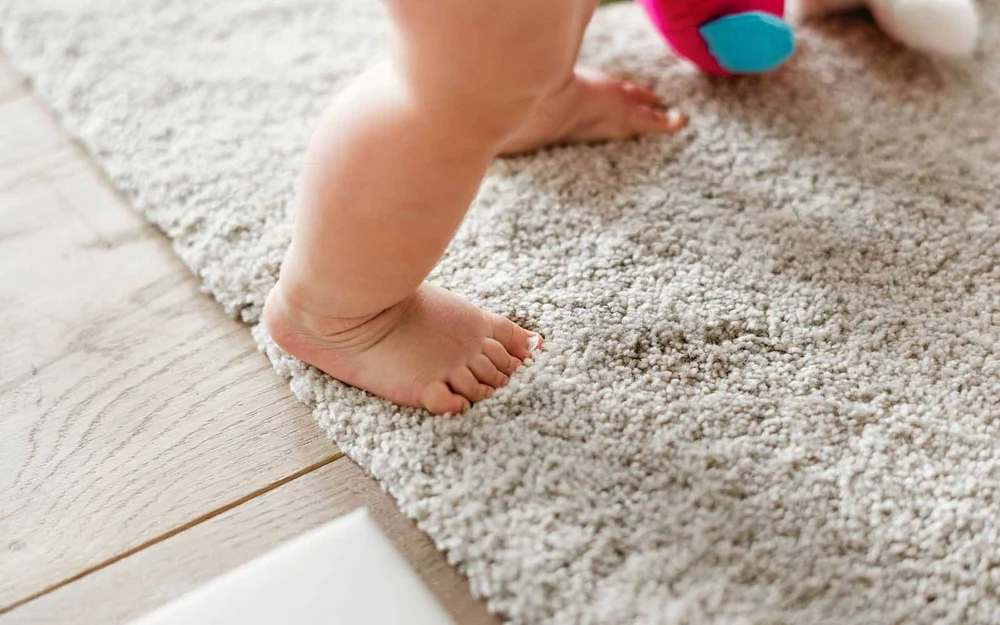
Kids are particularly vulnerable because they spend so much time crawling and playing on the floor. Older adults can also feel the effects more intensely, especially if they’re already dealing with respiratory issues.
Then there’s the skin side of things. Dust mite allergens can aggravate eczema and dermatitis, making flare-ups more frequent or stubborn. Many people only notice relief after their carpets or bedding get a proper clean, and those particles finally stop irritating their skin.
The Appeal of Soft Surfaces
Now that we’ve covered what dust mites are and how they mess with your sinuses, let’s talk about why carpets end up becoming their favourite hangout spots.
Carpets act a bit like giant filters. Every day, they quietly collect dust, skin cells, pet dander, pollen, crumbs, and all the tiny particles drifting around your home. The problem is that all those trapped particles double as a perfectly stocked pantry for dust mites.
Areas near heaters, sunny windows, or rooms that naturally stay warm tend to hold more of these particles, which means mites are more likely to move in there.
Humidity is another big player. Dust mites don’t need tropical weather to thrive. If a room doesn’t have great airflow or tends to feel a bit stale, the carpet in that space can hold onto moisture longer, making it especially inviting.
Then there’s the age and style of your carpet. Older rugs or higher piles trap more organic matter. Even with regular vacuuming, the lower layers can stay packed with particles simply because the fibres are thicker and harder to reach.
Your Roadmap to a Mite-Free Home
You don’t need hazmat suits or industrial-strength chemicals to get rid of mites, but you do need consistency.
The most effective technique is a mix of different hacks. One alone won’t reach every layer of your carpet, but together, they’ll make a serious dent.
Vacuuming
Vacuuming is your first and most reliable line of defence.
Start by getting a model with a HEPA filter. Instead of blowing allergens straight back into the room, HEPA filters trap the fine particles that would otherwise end up in your nose, lungs, or drifting lazily across your living room.
To make your routine more effective, aim to vacuum at least once a week or more if you have pets or kids. Also, take your time, as slow, overlapping strokes pick up far more dust and fluff than rushed zig-zags.
Finally, don’t forget to look after your vacuum. An empty canister and clean filters mean stronger suction and fewer frustrations.
Natural Solutions
If you like keeping things simple, DIY options work beautifully alongside vacuuming.
Baking soda is an old-school classic for a reason. Sprinkle a light layer over your carpet, let it sit for about an hour, then vacuum it up to pull out odours and excess moisture.
Then there are essential oils, like eucalyptus or tea tree. When lightly diluted and misted over your carpet, they discourage mites and make your home fresh.
And don’t underestimate the importance of fresh air. Open your windows on dry days and let the air circulate to help the carpets release trapped moisture and reduce that stale, heavy feeling in the room.
Steam Cleaning
If vacuuming is your day-to-day hero, steam cleaning is the big powerhouse behind the scenes.
It reaches deep into your carpet, right into the layers your vacuum can’t touch. Carpet cleaning Melbourne services use this technique to get rid of the grime that mites feed on and wipe out a big chunk of the mites themselves.
More often than not, you’ll need a professional clean every 6–12 months, though if you have pets or allergies, you can benefit from more frequent visits.
If you prefer to DIY, rental machines are absolutely fine. Just be careful with moisture. Too much water left behind can create the perfect conditions for mould, which is a whole other headache. So crank the fans, open the windows, and let your carpet dry completely.
Conclusion
Now that you know dust mites have been treating your carpet like their personal penthouse, it’s time to show them the door.
So, give our hacks a try and see the difference for yourself. It’s amazing how quickly fresh air and clear sinuses can boost your day!
Keep an eye for more latest news & updates on Tribune!