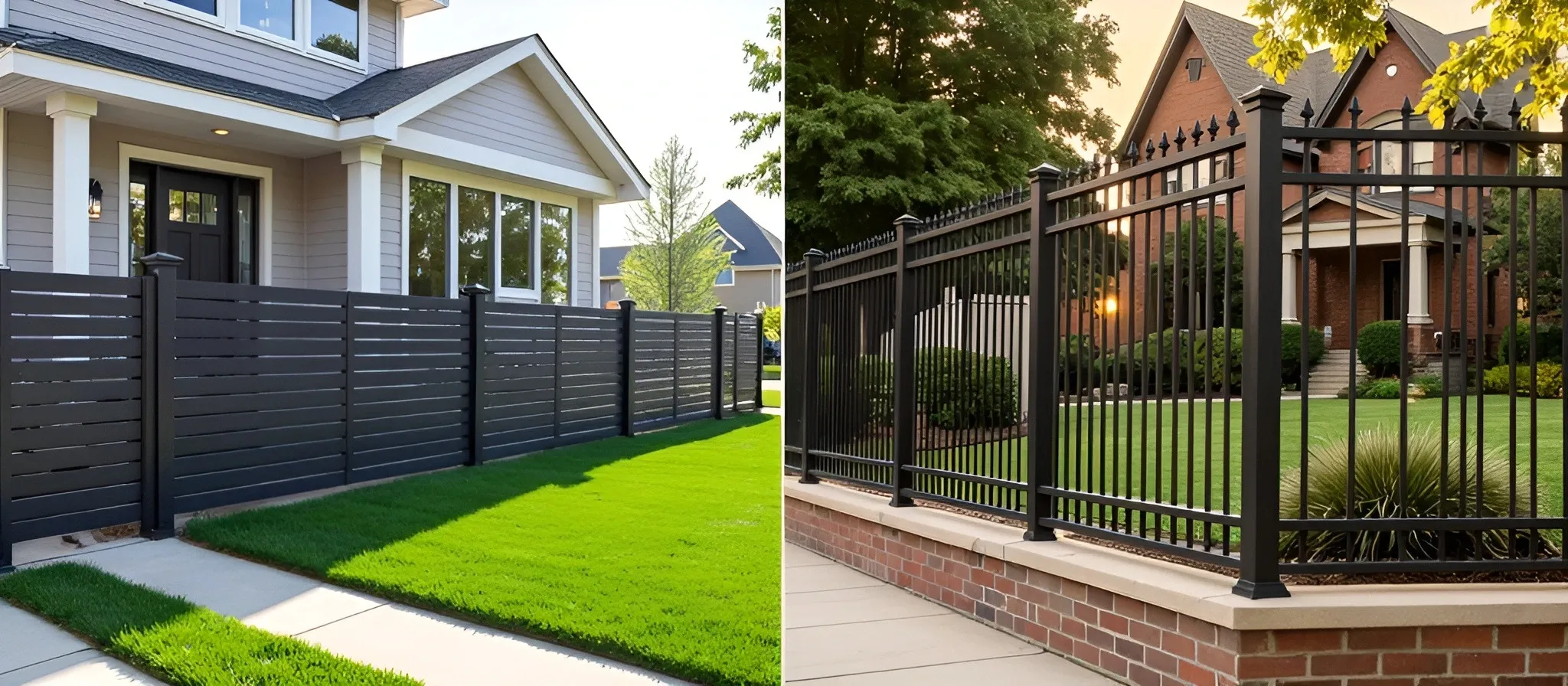
Most homeowners pick a fence material based on how it looks in a catalog photo. Then Chicago happens to it.
Freeze-thaw cycles, lake effect snow, humid summers, and the kind of temperature swings that crack concrete and buckle asphalt — all of it puts fence materials under real stress, notes Uplift Property Management specialists. A fence that looks great in a brochure from a southern manufacturer may behave very differently after five winters on the North Side.
This comparison draws on decades of field installation experience across Chicago neighborhoods, from Lincoln Park brownstones to commercial properties in the West Loop. The goal here is straightforward: give you an honest, practical breakdown of wrought iron and aluminum so you can make the right call for your property, your budget, and your local climate.
What You’re Actually Comparing
The phrase “iron vs aluminum fence comparison” gets thrown around a lot online, but the framing is often oversimplified. These are not interchangeable products with minor cosmetic differences. They behave differently under load, age differently, and suit different applications.
Understanding those differences starts with the material itself.
Wrought iron is a ferrous metal with low carbon content and a fibrous slag structure that gives it excellent tensile strength and workability. Historically, it was hammered or worked by hand, which is where the name comes from. Modern versions are typically mild steel fabricated to replicate classic wrought iron profiles, but high-quality installations still involve significant forge and weld work.
Aluminum fence is an extruded alloy product, much lighter than iron, that resists rust by nature rather than by coating. It’s manufactured in consistent profiles and sold in panel systems, which makes installation faster and more predictable, but limits customization.
Neither is universally better. The right choice depends on what you need from your fence.
Weight, Strength, and What Chicago Weather Does to Both
Chicago’s climate is genuinely brutal on exterior metalwork. The city averages around 38 inches of snow annually, and freeze-thaw cycles can occur dozens of times each winter. When water infiltrates a fence post or footing, freezes, and expands, it creates ground heave that shifts fence lines, stresses welds, and loosens hardware.
Wrought iron is heavy, which matters here in two ways. The weight gives it stability and resistance to wind loading, which is significant when lake effect gusts push through exposed yards near the lakefront. But that same weight creates more stress on fence posts and footings during ground movement. Proper installation, with deep-set concrete footings below the frost line, is non-negotiable for iron in this climate.
Aluminum is significantly lighter, roughly one-third the weight of comparable steel sections. That reduces stress on footings during freeze-thaw heave, but it also means a strong enough impact or sustained wind load can bend or crack aluminum pickets in ways that iron would resist. For a decorative front yard fence on a sheltered property, that trade-off is manageable. For a perimeter security fence on a commercial property, it matters more.
Corrosion Resistance: The Core Difference
This is where the materials diverge most dramatically.
Aluminum does not rust. Full stop. Its natural oxide layer forms instantly when exposed to air and acts as a self-sealing barrier against moisture. A quality powder-coated aluminum fence can go years without any meaningful maintenance and still look nearly identical to how it was installed.
Wrought iron corrodes when the protective coating is compromised. Bare iron plus moisture plus oxygen equals iron oxide, which is rust. In Chicago’s climate, that process accelerates. Road salt spray from plowing, humidity from lake proximity, and cycles of wet and dry all create conditions that attack any chip, scratch, or uncoated weld point.
That does not mean iron is a bad choice. It means iron requires a maintenance program. Typically, a thorough inspection and repainting every few years is enough to keep iron in excellent condition, provided the original coating was applied properly and weld points were sealed. A badly installed iron fence with poor paint adhesion at the welds will start showing rust within a season or two. A well-installed, properly maintained fence can last a century. Many of the wrought iron fences in Chicago’s historic neighborhoods are proof of that.
For property owners who want the look of iron without the maintenance commitment, aluminum is the more practical choice. For those who want genuine strength, custom profiles, and a material with real historical character, iron is worth the upkeep.
Maintenance Requirements: What Ongoing Ownership Actually Looks Like
Wrought iron:
- Inspect annually for rust spots, especially at weld points and ground-level sections
- Touch up paint at any scratches or chips within the season they appear
- Full repaint recommended every 3 to 7 years depending on exposure
- Sand or grind rust before repainting, never paint over active rust
- Professional painting ensures proper primer adhesion and long-term protection
Aluminum:
- Annual inspection for bent pickets, loose hardware, or coating chips
- Powder coating is durable but not indestructible; chips should be touched up
- No rust treatment required
- Hardware (hinges, latches, post caps) may need replacement over time
Realistically, aluminum’s annual maintenance cost and time investment is substantially lower. For rental properties or commercial installations where maintenance resources are stretched, that gap matters. For a homeowner who takes pride in their property and is willing to commit to a routine, iron’s maintenance demands are very manageable.
Customization: Where Iron Has a Clear Edge
If you have an older Chicago home with specific architectural details, a custom gate to match an existing fence, or a design that doesn’t fit a standard panel profile, aluminum’s limitations become apparent quickly. It comes in fixed profiles, standard heights, and a limited range of decorative options.
Wrought iron, particularly when fabricated in-house by an experienced ironworks shop, can be built to match virtually any design. Ornamental scrollwork, custom finials, arched tops, dual-swing gates with matching fence panels, historic restoration profiles: all of this is achievable with iron in ways that aluminum simply cannot replicate.
This is especially relevant in Chicago’s landmark districts and older residential neighborhoods. A property in Old Town or Wicker Park with an existing ornamental iron fence often needs new sections that match the original design exactly, not whatever happens to be in stock. That requires actual fabrication capability, not a panel ordering system.
The team at Americana Iron Works handles both materials but is clear about this distinction: if the project involves custom profiles, historic matching, or any non-standard dimensions, iron fabricated to spec is almost always the better path.
Cost: Framing It Correctly
Aluminum fence typically has a lower upfront material cost. Wrought iron, particularly custom-fabricated iron, costs more per linear foot, and the installation requires more skilled labor.
But that framing misses something important. Over a 20 to 30-year lifespan, the cost picture shifts. Aluminum may need section replacements if pickets bend or the coating fails in ways that can’t be easily repaired. Iron, maintained properly, can outlast the property owner by decades. The initial premium for quality iron installation often looks very reasonable when spread across that time horizon.
The right question isn’t “which is cheaper?” It’s “which delivers the best value for this specific property and how I plan to use it?”
For budget-conscious projects where maintenance is a concern, aluminum makes practical sense. For long-term investment in a permanent feature, custom iron often wins on total cost of ownership.
Which Applications Each Material Suits Best
Wrought iron is typically the better fit for:
- Historic or architecturally detailed properties requiring custom profiles
- High-security perimeter fencing on commercial properties
- Gates and entrances where strength and visual impact both matter
- Projects where longevity matters more than upfront cost
- Fence sections that need to match existing ironwork on older Chicago homes
Aluminum is typically the better fit for:
- Decorative front yard fencing on residential properties
- Pool enclosures where corrosion resistance is a priority
- Rental properties or commercial sites where low maintenance is essential
- Tighter budgets with standard profile requirements
- Projects where speed of installation is a factor
Neither material is universally superior. The right answer depends on what the fence is actually being asked to do.
Key Takeaways
- Wrought iron offers superior strength and customization, but requires a consistent maintenance routine to prevent rust, especially in Chicago’s climate.
- Aluminum resists corrosion without coatings and is genuinely low maintenance, but its fixed profiles and lighter weight limit its use in demanding or custom applications.
- Chicago’s freeze-thaw cycles affect both materials differently: iron’s weight demands proper deep footings, while aluminum’s lightness reduces ground heave stress but sacrifices impact resistance.
- Custom work, historic matching, and high-security applications almost always point toward wrought iron fabricated to spec.
- Total cost of ownership over 20 to 30 years often favors iron despite its higher upfront price, provided it’s installed and maintained correctly.
Frequently Asked Questions
Is wrought iron fence a good choice for a Chicago home with an older architectural style? Yes, and often it’s the best choice. Older homes in neighborhoods like Lincoln Park, Gold Coast, and Wicker Park frequently have existing ironwork that needs to be matched or extended. Aluminum panels won’t achieve that kind of design continuity. Custom-fabricated iron can be built to match original profiles, finials, and decorative details precisely.
How often does a wrought iron fence in Chicago need to be repainted? Most iron fences in Chicago benefit from a full repaint every 3 to 7 years, depending on exposure. South-facing sections that get direct sun and properties near the lake or high-traffic streets may need attention more frequently. Minor touch-ups at scratches and chips should happen within the same season the damage appears, before moisture gets underneath the coating.
Does aluminum fence look noticeably cheaper than wrought iron? It can, though better-quality aluminum profiles have improved significantly. The visual difference is most apparent up close and in custom or ornate designs, where aluminum’s extruded uniformity contrasts with the texture and variation of hand-worked iron. For a simple picket-style fence viewed from the street, the visual difference is less pronounced.
Can aluminum fence be repaired if a section is bent or damaged? Individual pickets and sections can usually be replaced, but matching the original finish and profile exactly can be difficult if the product line has changed. Iron, by contrast, can be repaired and refinished in place for many types of damage without full section replacement.
What’s the installation timeline difference between wrought iron and aluminum? Aluminum panel systems install faster because the components are pre-manufactured. Custom iron takes longer because fabrication happens before installation. A straightforward aluminum fence might be installed in a day or two. A custom iron project with gates may involve a few weeks of fabrication time before the installation crew arrives. That lead time is worth planning for.
Conclusion
The wrought iron fence Chicago property owners rely on for historic homes isn’t just an aesthetic choice. It’s a material decision with real implications for strength, longevity, maintenance, and design flexibility. Aluminum is a genuinely useful option, too, just for different reasons and different situations.
What matters most is that the decision gets made with accurate information, not just what looks good in a brochure. Know your climate, know your property, and know what the fence is actually being asked to do. The rest of the decision tends to follow naturally from there.
If you’re weighing options for a specific project, talking to a contractor who installs both materials, and has done it for years across a range of Chicago properties, is the fastest way to get a realistic picture of what will actually serve you best.