A pocket door is a brilliant answer in a compact home. It gives a small bathroom, en suite, pantry, or laundry cupboard a proper closing door without stealing the floor space a swinging door needs. When it glides well, you barely notice it. When it sticks or judders halfway across, it becomes the most annoying door in the house.
Most sticking pocket doors are not failed doors. Usually the cause is dirt in the track, a worn or tilted roller, a loose floor guide, or a door that has dropped a few millimetres. Those faults can normally be fixed in an afternoon, without opening the wall. Work in order: diagnose, inspect, clean, adjust, and only then replace parts.
How Pocket Doors Work
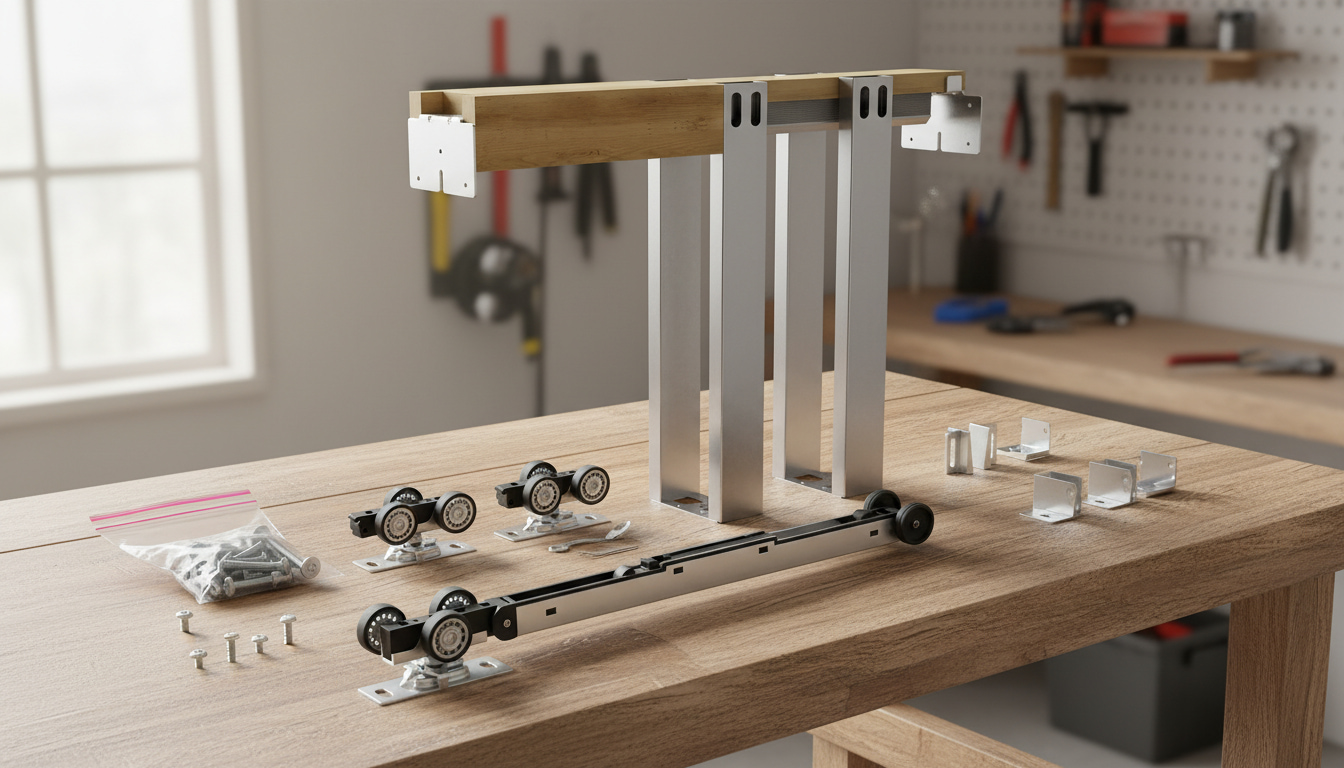
A pocket door hangs rather than swings. Two wheeled hangers, called rollers or trucks, bolt to the top edge of the door and run inside an overhead track fixed to the header. Slide the door open and it travels sideways into a hollow pocket inside the wall — a frame of split studs or a steel cassette with a slot just wide enough for the slab.
At floor level, a small guide sits in a groove in the bottom of the door or straddles its lower edge. The guide carries no weight; it simply stops the bottom swinging as the door moves. A stop inside the pocket halts the door at full travel, and a pull handle lets you draw it back out.
Because everything is hidden, small changes have outsized effects. A door that drops 3 millimetres can drag on the guide. One flat-spotted roller can make it feel as if it is running over gravel. Since the door is top-hung, look up first, not down.
Diagnosing Why Your Pocket Door Is Sticking
Do not buy parts yet. Slide the door slowly through its full travel three times and note where and how it resists. That pattern is your best diagnostic tool.
Read the Symptoms Before You Reach for Tools
- Sticks at the same spot every time: suspect a dent, a proud screw, or debris at that point in the track.
- Stiff along the whole travel: suspect general dirt, dry or worn rollers, or a door rubbing the pocket frame.
- Scrapes near the floor: suspect a dropped door, a damaged guide, or flooring raised by new tiles or carpet.
- Tilts or wobbles at the bottom: suspect a loose or missing floor guide, or one roller set higher than the other.
- Suddenly jammed after working fine: suspect something in the pocket, such as a toy, screw, or broken roller part.
Check the obvious, too. Paint drips on the door edge often drag inside the pocket, and new trim fitted too close can pinch the door face. Slight settlement can also rack the frame so a door that cleared for years now catches at one corner.
Inspecting the Track and Rollers
You need a torch, a step stool, a screwdriver, and your phone camera. Close the door fully so the rollers sit over the opening, where most tracks give clearance to see the hangers. Shine the torch along the track from both ends, looking for grit, bent track lips, and screw heads proud of the running surface.
Slide the door an inch at a time and watch the top gap, which should stay even. If it narrows, the track may be sagging or a roller collapsing. Bolts into the top of the door should be tight, and each roller should spin freely when flicked during a slow slide.
What Worn Hardware Actually Looks Like
- Rollers with flat spots, cracked nylon wheels, or rough bearings that no longer spin smoothly.
- A track worn into a groove, kinked at a joint, or pulled away from the header on loose screws.
- Hanger brackets bent sideways, making the door run at an angle and rub one face.
- A floor guide that is cracked, loose on its screws, or worn into a wide, sloppy slot.
Photograph each hanger and any maker’s markings before removing anything. A clear photo at the hardware store beats measurements taken from memory.
Cleaning and Lubricating the Track
Cleaning alone cures more sticking doors than any other step, especially after building work or years of dust. Expect the first pass to be filthy.
A Cleaning Routine That Reaches Inside the Pocket
- Vacuum the track with a crevice nozzle, sliding the door fully each way to reach the section inside the pocket.
- Wrap a damp microfibre cloth around a ruler and run it along the track to lift compacted grime.
- Pick out hardened paint and grit with a plastic scraper or old toothbrush; avoid gouging aluminium with steel tools.
- Wipe the roller wheels and top edge of the door, then vacuum the floor guide and its groove.
- Slide the door ten times end to end, then vacuum once more.
Once clean, lubricate sparingly. Dry silicone spray or PTFE dry lubricant is ideal because it leaves no sticky film. Avoid general-purpose oil: it works for a week, then collects dust into a grinding paste. Apply a short burst to each roller bearing, slide the door to spread it, and wipe away excess. The job takes 30 to 45 minutes and costs under $15.
Adjusting and Replacing Rollers
If cleaning does not restore a smooth glide, adjust next. Most hangers have a threaded stud or nut that raises or lowers each end independently. If the slim adjustment wrench is missing, a thin spanner, usually under $10, does the same job.
Close the door and check the reveals. Gaps at the top and meeting edge should be even, and the bottom should clear the floor by roughly 5 to 10 millimetres. Turn the nut a quarter-turn at a time on the low side, test, and repeat. Level the door before judging anything else, because a tilted door mimics almost every other fault.
Replacing Rollers That Are Beyond Adjustment
Rollers with flat spots, cracked wheels, or seized bearings will never run smoothly, however clean the track. Replacement sets cost roughly $15 to $45 per pair, and most fit without removing the door completely. Release the hanger clip, tilt the door, and lift it off the studs, supporting its weight with a helper or wooden blocks.
- Match new rollers by wheel diameter, bracket shape, and weight rating — a solid-core door needs hangers rated for its weight.
- Replace rollers as a pair, even if only one looks damaged; the survivor is usually close behind.
- Copy the stud height settings from the old hangers as a starting point, then fine-tune once rehung.
- Test fully open and fully closed; some faults only appear at the far end of the track.
If your hanger is obsolete, universal kits at around $40 to $90 fit most standard tracks. Keep the old parts until the door has run smoothly for a week.
Repairing the Door and Frame
Sometimes the hardware is innocent. A bathroom door that absorbs steam for years can swell or warp, so its face rubs inside the pocket. Slide it slowly and listen for a rub that stays in one area of the door rather than one point of travel. Light rubbing can be cured by planing a few millimetres off the edge and resealing the timber.
Check trim and guides, too. Loose architrave can bow inward and kiss the door face; refixing it with screws into the stud pulls it flat. Re-screw a loose floor guide, filling stripped holes with glued dowel first. If new flooring has raised the floor, raise the door on its hangers first — trimming a hollow-core door is limited by its thin bottom rail.
Maintenance and When to Replace the Hardware
Pocket doors ask for very little, but regularly. Twice a year, vacuum the track, wipe the rollers, check the guide screws, and confirm the door clears the floor evenly. That ten-minute routine prevents almost every common fault. Never drive long screws into the pocket wall without checking the door’s path — a protruding screw tip is a classic cause of a door that jams after picture hanging.
Signs the Whole System Has Reached Its Limit
- The track is bent, split, or corroded along its length, not just dirty or loose at one point.
- Replacement rollers are discontinued and universal kits do not fit the track profile.
- The door is warped beyond planing, delaminating, or too heavy for the frame’s hardware.
- The door drops again within weeks of adjustment, suggesting the header or frame is moving.
A complete kit — track, rollers, guides, and stops — typically costs $80 to $250, but fitting it can mean opening the pocket wall, adding plastering and decorating. Professional installation commonly runs $600 to $1,500 depending on region. Cleaning, adjustment, and roller replacement cost under $60 and resolve most sticking doors, so exhaust those first.
Final Thoughts
A sticking pocket door feels like a major defect because the mechanism hides inside the wall, but it is simple: a door hanging from two rollers on a straight track. Work in order — diagnose, inspect, clean, lubricate dry, level the hangers, and replace worn rollers as a pair. Resist forcing a stiff door or opening the wall early. An afternoon of patient work usually restores its quiet, one-finger glide.
Frequently Asked Questions
Can I fix a sticking pocket door without removing it or opening the wall?
Usually, yes. Cleaning, lubricating, adjusting hanger height, and refixing the floor guide can all be done with the door in place. Opening the wall is only needed when the track is damaged or a roller assembly has come apart inside the pocket.
What is the best lubricant for a pocket door track?
Use dry silicone spray or PTFE dry lubricant. These keep rollers moving without sticky residue. Avoid standard oils, which attract dust and grit and make the door stiffer.
How much does it cost to repair a sticking pocket door myself?
Most do-it-yourself repairs cost under $60. Lubricant is under $15, rollers are $15 to $45 a pair, and a floor guide is under $10. Professional repair commonly starts around $150 to $300.
Why does my pocket door keep coming off its track?
Usually a missing or loose floor guide, rollers set at uneven heights so the door runs tilted, or a worn roller that climbs the track lip. Level the hangers, secure the guide, and inspect the wheels for flat spots or cracks.
When should I call a professional instead of repairing it myself?
Call a carpenter if the track is bent, the door is badly warped, the frame is moving, or the repair requires opening the wall. Also get help with heavy solid-core or glazed doors, which are risky to lift alone.