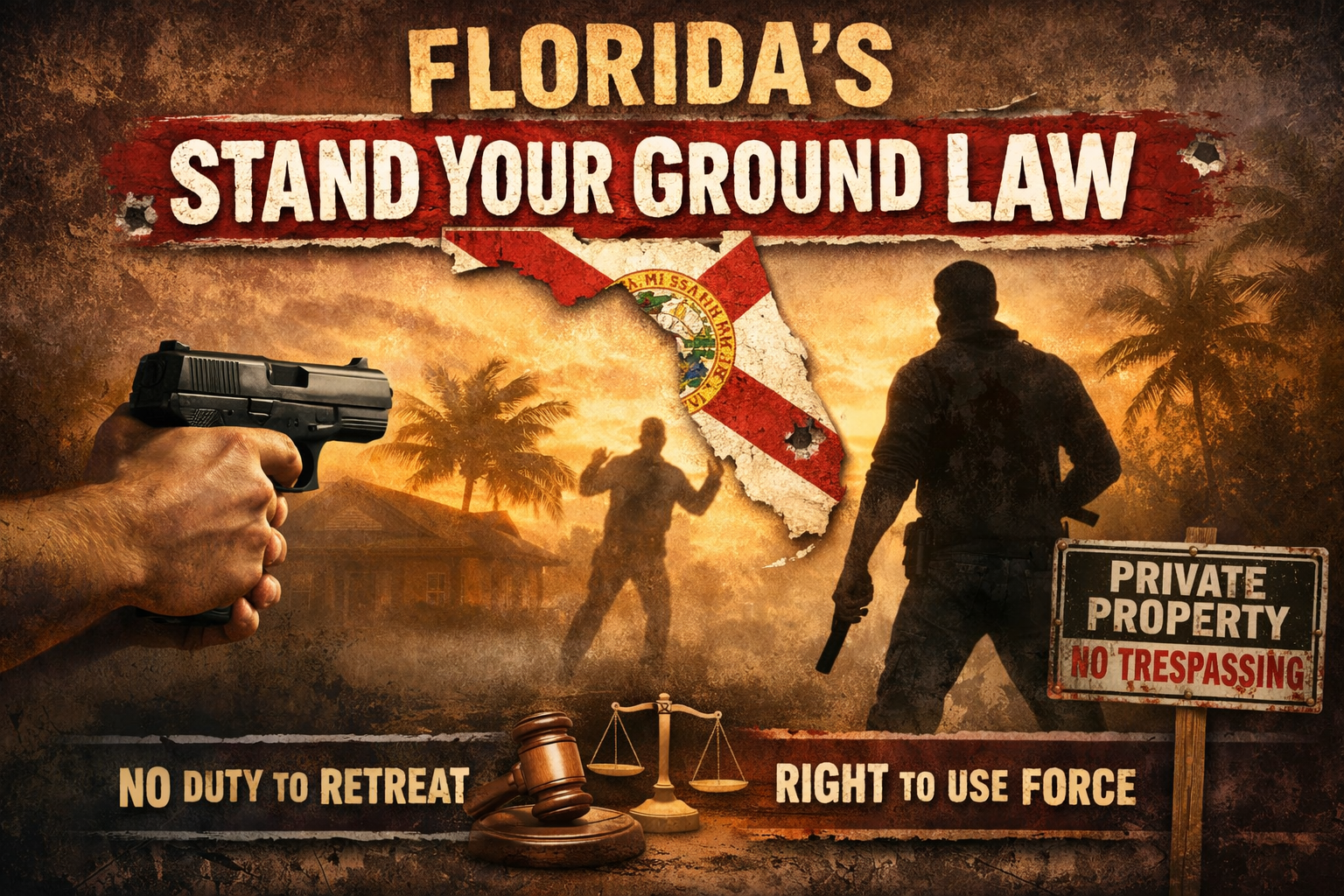
When people hear the phrase “Stand Your Ground,” they often think it means a person can use force anytime they feel threatened. In reality, Florida’s self-defense laws are far more detailed and fact-specific. Whether someone lawfully acted in self-defense often depends on the exact circumstances of the encounter, the level of threat involved, and whether the person’s actions were legally justified.
If you have been accused of a violent offense involving the use or threatened use of force, understanding Florida’s self-defense laws is critical. A skilled Tampa criminal defense attorney can evaluate whether Stand Your Ground protections may apply and aggressively fight to protect your rights.
What Is Florida’s Stand Your Ground Law?
Florida’s Stand Your Ground law allows individuals to use—or threaten to use—force in certain situations without first attempting to retreat. Under Florida law, a person who is lawfully present in a location and not engaged in criminal activity generally has no duty to retreat before defending themselves against an imminent threat.
However, contrary to common misconceptions, Stand Your Ground is not unlimited immunity from prosecution. Prosecutors, judges, and juries closely examine the facts to determine whether the use of force was legally justified.
What Counts as “Deadly Force” in Florida?
Deadly force refers to force that is likely to cause death or great bodily harm. Great bodily harm means serious injury—not minor bruises or insignificant physical harm.
Importantly, Florida law recognizes both the use of deadly force and the threatened use of deadly force. In some cases, merely displaying a firearm or threatening force to stop an imminent attack may fall within Florida’s self-defense protections if done lawfully.
Every case turns on its facts. What may appear justified in one situation may not be justified in another.
When Is Deadly Force Legally Justified?
Florida law generally permits the use or threatened use of deadly force when a person reasonably believes it is necessary to prevent:
- Imminent death;
- Imminent great bodily harm; or
- The imminent commission of a forcible felony, such as robbery, aggravated assault, burglary, or kidnapping.
This legal standard includes both a subjective and objective component.
First, the person claiming self-defense must have genuinely believed force was necessary. Second, that belief must also be objectively reasonable under the circumstances. In other words, would a reasonable person in the same situation have believed force was necessary to avoid immediate harm?
Notably, the danger does not have to be real—it only has to reasonably appear to be real at the time.
The Meaning of “Imminent” Threat
A major issue in many self-defense cases is whether the danger was truly imminent.
Florida law generally protects people responding to immediate threats—not speculative fears or future dangers. A person cannot usually justify deadly force based on something they think might happen later. Instead, the threat must be occurring or about to occur at that moment.
Because this question is highly fact-dependent, prosecutors often challenge whether a defendant’s fear was reasonable or whether the threat was truly immediate.
No Duty to Retreat in Florida
One of the most widely known aspects of Florida law is that a person generally has no duty to retreat before using deadly force if:
- They are in a place where they have a lawful right to be; and
- They are not engaged in criminal activity.
If those conditions are met, the law generally allows a person to stand their ground rather than attempting to escape before defending themselves.
However, these protections may not apply if the person was trespassing, committing a crime, or otherwise acting unlawfully at the time of the confrontation.
Florida’s Castle Doctrine
Florida law provides even greater protections when someone is defending themselves inside a residence, dwelling, or occupied vehicle.
Often referred to as the Castle Doctrine, these legal protections may create a presumption that a person reasonably feared imminent death or serious bodily injury if someone unlawfully and forcibly enters a home or occupied vehicle.
In many situations, there is no duty to retreat inside one’s home.
That said, there are important exceptions. The presumption may not apply if:
- The person entering had a legal right to be there;
- The person using force was engaged in criminal activity; or
- The individual against whom force was used was a law enforcement officer acting within official duties.
Important Limits on Stand Your Ground
Florida self-defense laws are powerful, but they are not absolute.
The Initial Aggressor Rule
Generally, a person who provokes or initiates a confrontation cannot later claim self-defense. There are limited exceptions, such as when the person clearly withdraws from the encounter and the other party continues the violence.
Additionally, if a confrontation unexpectedly escalates to deadly force, self-defense protections may still apply under certain circumstances.
Criminal Activity Can Undermine a Defense
A person engaged in criminal conduct at the time of the incident may lose Stand Your Ground protections. This issue frequently becomes a major battleground in violent crime prosecutions.
Resistance to Law Enforcement
Florida law generally does not allow a person to resist law enforcement officers performing lawful duties. However, in rare circumstances involving excessive force, limited defensive force may be legally justified.
How Juries Evaluate Self-Defense Claims
In Stand Your Ground cases, juries are often asked to evaluate:
- Whether the defendant reasonably feared harm;
- Whether the threat was immediate;
- The circumstances surrounding the confrontation;
- The size, physical condition, and relative abilities of the individuals involved.
Evidence of prior threats, violent history, or known aggressive behavior by the alleged victim may also become important in evaluating a self-defense claim.
Why You Need an Experienced Tampa Criminal Defense Attorney
Self-defense cases are rarely straightforward. They often involve conflicting witness statements, unclear evidence, surveillance footage, and split-second decisions made during stressful situations.
Even when someone acted lawfully, prosecutors may aggressively challenge a Stand Your Ground defense.
An experienced Tampa criminal defense attorney can investigate the facts, identify weaknesses in the prosecution’s case, seek dismissal through Stand Your Ground immunity proceedings when appropriate, and present a compelling defense at trial.
Contact Hunt Law for Aggressive Criminal Defense
If you have been arrested for a violent crime in the Tampa Bay area and believe you acted in self-defense, early legal intervention matters. The difference between lawful self-defense and criminal liability can depend on how quickly evidence is preserved and how effectively your defense is presented.
At Hunt Law, we fight aggressively to protect the rights, freedom, and future of people accused of crimes throughout Hillsborough County and the Tampa Bay area. Contact us today for a free and confidential consultation with an experienced local defense attorney.