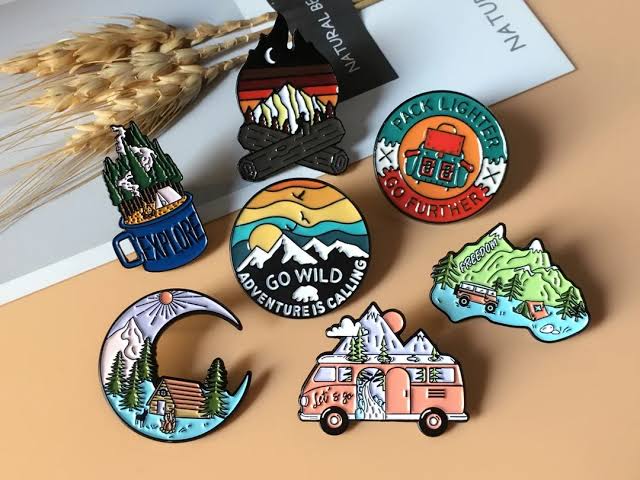
Across Texas, lapel pins can turn a team achievement, volunteer effort, school tradition, reunion, fundraiser, or local event into something people can wear and keep. Well-designed custom lapel pins give a group a compact visual language, whether the inspiration is a West Texas horizon, Gulf Coast waves, Hill Country wildflowers, or the familiar Lone Star.
The best pin is not simply a logo made smaller. It captures one clear idea in a form that remains readable from a normal viewing distance. Pins have long been used for decoration, affiliation, recognition, collecting, and trading, which helps explain why a thoughtfully designed piece can carry meaning long after an event ends.
Why Lapel Pins Still Matter
A pin gives people a simple way to show participation and belonging. It can recognize years of service, identify a club member, celebrate a championship, or preserve a shared memory from a festival or conference. The history of lapel pins also reflects their use as wearable markers of organizations, causes, accomplishments, and collections.
In Texas, local character gives designers plenty to work with. A pin for a coastal cleanup may use a wave or shorebird, while a ranching association might choose a restrained western element. The goal is not to add every regional reference. It is to select one that immediately supports the story.
Start With a Clear Purpose
Define why the pin exists before choosing its colors, shape, or finish. A recognition pin should feel earned. An event pin should help people remember a particular place and date. A membership pin should be recognizable across meetings, uniforms, and photographs.
Useful Questions to Ask
- Is this pin for recognition, attendance, membership, fundraising, or trading?
- Will people wear it, display it, or collect it as part of a series?
- Should it feel formal, historic, playful, rugged, or modern?
- What single detail should a person remember after seeing it?
Build the Message Before the Artwork
Small objects work best when they communicate one main message. Write a brief before sketching: identify the purpose in one sentence, select a central image, list any required words or dates, and decide where the pin will be worn. This step prevents a design from becoming a crowded collection of unrelated ideas.
If the pin celebrates a 10K, for example, the runner or route-inspired shape can be the visual focus. The event name and year should support that image, not compete with it.
Choose Symbols That Carry Meaning
Use symbols people can recognize quickly. A star may suggest achievement, a torch may represent progress, a book may symbolize education, and a mountain may signal a challenge. Texas organizations can also draw from the state’s established visual vocabulary. The official Texas state symbols include the bluebonnet, pecan tree, mockingbird, prickly pear, and other references that can add local relevance when used appropriately.
Symbol Selection Checklist
- Does the symbol connect directly to the group, place, or achievement?
- Can it be understood without tiny explanatory text?
- Will it still make sense after the event is over?
- Could it be mistaken for another organization’s protected or recognizable emblem?
Plan for Size, Detail, and Readability
A pin may look large on a monitor but be only a small object in hand. Fine lines, narrow gaps, dense lettering, and tiny interior scenes can lose clarity at production size. Prioritize a strong silhouette, clear outlines, and enough open space between elements.
Keep wording short. A date, city, team name, or achievement level is often enough. Before approval, print the artwork at the intended size or view it at that scale on screen. If the main symbol cannot be identified quickly, simplify it.
Use Color With Intent
Color sets the mood and helps separate important elements. Bright combinations can suit youth programs, celebrations, and sports teams, while deeper blues, greens, burgundies, or blacks can create a more formal impression. Limit the palette to colors with a job to do, such as distinguishing the central image from the background.
Check contrast before finalizing. Text should not blend into its field, and a dark outline can help a light-colored symbol remain visible. A design that still reads in a single-color sketch often has a strong visual structure.
Select the Right Finish and Backing
The finish should reinforce the design rather than overwhelm it. Smooth enamel-style surfaces can suit clean graphics and formal emblems. Textured or antiqued metal can complement heritage themes, western motifs, and designs with larger raised details. Polished metal may add brightness, while an antique effect can make recessed features easier to notice.
Also consider how the pin will be used. A standard clutch back may work for occasional wear, while a more secure backing can be useful for uniforms, frequent use, or heavier pieces. If protecting delicate fabric is a concern, a magnetic option may be worth discussing.
Design Pins for Texas Events and Teams
Event pins need enough information to preserve the memory without becoming cluttered. A community race might use the same running-shoe or route-marker concept every year, then update the year, color, and host city. That approach builds a collectible series while keeping the event recognizable.
Teams can do the same with a shared emblem. Keep the overall shape consistent, then differentiate seasons, roles, service years, or achievement levels using a border color, a small numeral, or a secondary icon.
Avoid Common Design Mistakes
- Adding a sentence when a short phrase will do.
- Using several symbols that do not tell one story.
- Choosing low-contrast colors.
- Copying another group’s distinctive artwork.
- Ignoring the actual size and intended placement of the finished pin.
- Approving artwork without checking spelling, dates, and quantities.
Review the Proof Before Production
- View the artwork at its finished dimensions.
- Check every word, number, date, and location.
- Confirm that the main symbol reads clearly at a glance.
- Review colors with the selected metal finish.
- Ask someone outside the project what message they see first.
- Confirm the backing, size, quantity, and delivery schedule.
Common Questions About Lapel Pin Design
How Much Text Should a Lapel Pin Include?
Use only what is needed to identify the event, group, date, or achievement. Short text is easier to read and leaves room for the central symbol.
What Makes a Pin Effective for Recognition?
An effective recognition pin connects to a specific accomplishment or value. It should feel distinctive to the recipient while remaining understandable to others.
Should Every Event Have a Completely Different Pin?
Not necessarily. A repeatable design system can create a stronger collection. Change the year, color, location, or award level while retaining the feature people associate with the event.
Final Thoughts
The strongest Texas lapel pins do more than display artwork. They honor service, mark a milestone, build team identity, and give people a tangible reminder of where they have been together. Start with purpose, simplify the message, test the details at real size, and let one meaningful symbol carry the design.