A well-chosen shutter is the first line of defence between your home and the weather: blazing afternoon sun, ultraviolet light that fades floors and furniture, driving rain, hail, and windborne debris. The right style depends less on looks alone than on which threat matters most at each window.
In short, exterior shutters protect best because they stop sunlight and wind before they reach the glass, while interior shutters are best for daily light, glare, and privacy. For serious storm country, only a rated exterior system — accordion, roll-down, Bahama, or colonial shutters installed and anchored as a storm system — counts as storm protection. Decorative panels screwed flat to the wall do not protect a window in a storm, and interior plantation shutters, for all their charm, are not hurricane shutters.
How Sunlight and Storms Attack a Window Differently
Sunlight attacks in three ways at once. Direct sun pours heat through the glass, turning a west-facing room into a greenhouse by late afternoon. Ultraviolet light quietly fades hardwood, rugs, and upholstery, even on days that do not feel especially hot. Glare makes a room hard to use, forcing blinds down and lights on at midday. Exterior shading deals with all three before the energy enters the house, which is why energy guidance favours outside shading for cooling. Interior shutters still cut glare and add a modest insulating layer, but once sunlight has passed through the glass, much of its heat is already inside.
Storms attack differently, and that decides which shutters genuinely protect. Wind alone rarely breaks a sound window; windborne debris, pressure changes, and driving rain do the damage. Once glass breaks, wind and water enter the house and the risk to the roof and interior rises sharply. A storm shutter must therefore cover the whole opening, be anchored into the structure around it — not merely into trim or siding — and be closed before the storm arrives. A louvered panel that lets air through, or a decorative panel that cannot close at all, cannot do that job, however solid it looks from the street.
Louvered and Plantation Shutters for Everyday Sun Control
Louvered shutters are the classic workhorse of sun control. Their angled slats let air move through while blocking direct sun and cutting glare, making them comfortable in warm climates and on windows you like to leave open for a breeze. Exterior louvered shutters suit Colonial, Georgian, Victorian, and coastal homes. Fixed panels give shade and privacy; operable panels can be angled or swung open, so a room moves from bright and breezy to shaded in seconds. Their weakness is their strength: the gaps that admit air also admit some light, rain, and wind, so they moderate weather rather than sealing it out.
Why Interior Plantation Shutters Belong in the Sun-Control Conversation
Plantation shutters sit inside the window, with wide louvers that tilt like a dimmer switch for daylight. They excel at glare control, privacy, and a tailored look, and their frame adds a modest insulating layer against winter drafts. They also reduce fading, because closed or angled louvers block much of the direct sun that bleaches fabrics and wood. What they do not do is protect the glass: in a storm, an interior shutter is on the wrong side of the window, made of the wrong materials for impact, and anchored to the interior frame. Treat plantation shutters as a comfort upgrade, and pair them with a rated exterior system if storm protection is also needed.
Bahama and Colonial Shutters: Shade That Doubles as Storm Cover
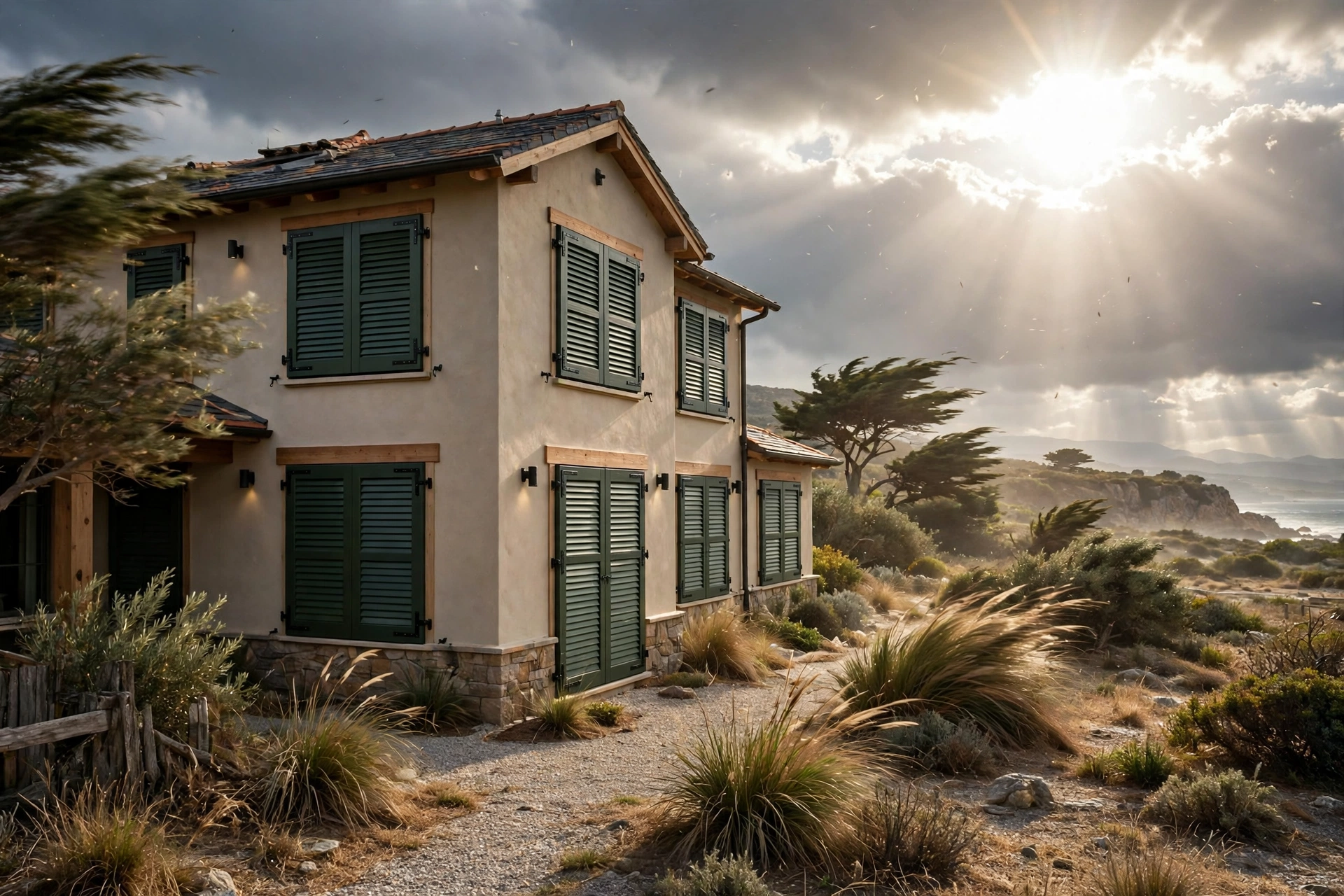
Bahama shutters, also called Bermuda shutters, hinge at the top and prop open outward at an angle, like a fixed awning. Open, they shade the glass all day, deflect rain, and still let breezes pass underneath — a combination favoured on tropical, coastal, and Mediterranean-style homes. When a storm is forecast, the prop arms release and the panel closes flat over the window. That dual life is their great advantage: unlike storm panels stored in a garage, Bahama shutters are already on the house and can be closed by one person, with no assembly in rising wind.
Colonial shutters work the same way from the sides: two panels hinge to the frame and swing shut to meet in the middle. Traditional colonial shutters are louvered, preserving some light and air when closed, while storm-rated versions use stronger construction and hardware. For either style, the rating matters more than the silhouette. A decorative Bahama or colonial panel is not a storm shutter until it is built, tested, and anchored as one, so check the product rating and local code requirements rather than assuming the shape guarantees protection.
Solid-Panel, Board-and-Batten, and Raised-Panel Shutters for Full Blackout
When the priority is blocking light completely, or closing a window down hard against wind and rain, solid shutters beat slatted ones. Raised-panel shutters, with formal rectangular panels, suit Georgian, Federal, and traditional homes. Flat-panel shutters give the same solid coverage in a plainer, modern form. Board-and-batten shutters — vertical boards held by horizontal or diagonal battens — bring a rustic farmhouse or cottage character and are simple and sturdy, easy to repair board by board. Closed, all three shut out sunlight almost entirely, improve privacy, and add insulation over the glass.
Their trade-off is ventilation. A solid shutter keeps a room dark and cooler, but it also stops airflow, so it is less comfortable than a louvered shutter on a mild evening when you want shade and breeze together.
Accordion, Roll-Down, and Storm-Panel Shutters for Hurricane-Country Windows
In hurricane and severe-storm regions, protection is a system, not a style. Accordion shutters fold to the sides when not in use and pull across to lock in the middle, giving strong permanent coverage without storage. Roll-down shutters drop from a housing box above the window — manually or by motor — forming a solid metal curtain; motorised versions can secure a whole house in minutes, which matters when a forecast changes quickly or the owner is away. Removable storm panels, usually aluminium or polycarbonate, bolt over the opening and are the most budget-friendly rated option, but they must be stored, carried, and fitted in advance — a real drawback for upper-storey windows.
Three details decide whether any system works. First, the rating: look for products tested for wind pressure and impact for your area, and keep the approval paperwork for insurance and resale.
Shutter Materials That Survive Sun, Salt, and Storm Seasons
Material decides how long a shutter keeps its looks and strength. Wood is beautiful and paintable, but it needs regular painting or sealing and can swell, crack, or rot if maintenance slips, especially in humid or coastal air. Vinyl is light, affordable, and low-maintenance, yet it can warp in intense heat and is generally decorative rather than storm-rated.
Finish matters almost as much as the base material. A light colour reflects more solar heat than a dark one, keeping shutter and room cooler, and a quality exterior paint or powder-coat protects against ultraviolet breakdown.
Matching a Shutter Style to Climate, Window Direction, and House Style
Start with climate, then direction, then architecture. In hot, sunny regions, exterior shading pays first: Bahama shutters on south- and west-facing windows, louvered shutters where breeze matters, and solid or roll-down shutters on rooms that overheat by afternoon. In hurricane country, rated accordion, roll-down, Bahama, or colonial systems come first, with sun control as a welcome second benefit.
- Hot and sunny: exterior Bahama or louvered shutters first, to stop heat before it reaches the glass.
- Storm-prone: rated accordion, roll-down, Bahama, or colonial systems, anchored as a complete system.
- Cold winters: interior plantation or solid closing shutters to cut drafts, kept open on sunny winter days.
- Privacy without darkness: louvered or plantation shutters, angled to block sightlines while admitting light.
Measuring, Fitting, and Keeping Sun-and-Storm Shutters Working
Accurate measuring is unglamorous and decisive. Measure width and height in three places, use the smallest measurement for an inside fit, and note obstructions such as handles, cranks, and trim that could stop a panel closing flat. Operable shutters need clearance to swing or drop freely, and Bahama shutters need a prop arm that holds the panel at a safe angle without blocking a walkway. Check that the wall can take the fixings: hollow siding, crumbling brick, or rotted trim will not hold a storm shutter, and that substrate may need repair before installation begins.
Care is simple but should not be skipped. Wash exterior shutters with mild soap and water, clear debris from tracks and louver gaps, and lubricate hinges, locks, and roll-down mechanisms at least once a year, ideally before storm season. Repaint or reseal wood before bare patches appear, and test every operable shutter by closing and latching it fully.
Final Thoughts: Shutter Styles That Earn Their Place on Your Windows
The best shutter matches the window’s hardest job and is still in good working order when that job arrives. For most homes, that means exterior shade on the sunniest windows, operable solid or louvered cover where privacy and wind matter, and a rated, permanently installed system wherever storms are a real risk — with interior plantation shutters doing the daily work of light and glare control inside. Choose the style by climate and direction, the material by what your weather does to it, and the hardware by whether it will hold when it counts.
Window Shutter Protection FAQs
Do window shutters really reduce heat inside a home?
Yes, especially exterior shutters, which block sunlight before it passes through the glass and prevents the greenhouse effect that heats a room.
Are plantation shutters good for storm protection?
No. Plantation shutters are interior treatments for light, privacy, and appearance.
What is the difference between Bahama and colonial shutters?
Bahama shutters hinge at the top and prop open outward like an awning, giving permanent shade and rain deflection. Colonial shutters hinge at the sides and swing shut to meet in the middle.
Which shutter style gives the most privacy?
Solid-panel, raised-panel, and board-and-batten shutters give the most privacy when closed, because they leave no gaps. Louvered and plantation shutters give adjustable privacy: angled louvers block direct sightlines while still admitting light and air.
Can I install window shutters myself?
Decorative and light operable shutters on ground-floor windows are a realistic DIY project with accurate measurements and sound framing. Rated storm systems, motorised roll-down shutters, and any upper-storey or structurally doubtful installation are better left to a professional, because anchoring and operation are safety-critical.
How do I maintain exterior shutters in a coastal climate?
Wash them regularly to remove salt, clear tracks and louver gaps, and inspect hinges, latches, and fasteners for corrosion at least once a year. Use stainless or coated hardware, touch up damaged coatings promptly, and repaint or reseal wood before the finish fails, since salt air punishes neglected surfaces quickly.
Do shutters need to match my home’s architectural style?
They should complement it, but performance comes first.