A window can look perfectly sealed and still be quietly filling with water. Modern frames are built from hollow chambers, and rain that blows past the weatherstripping, condensation that runs down the glass, and wash water all collect in the sill pocket at the bottom of the frame. A window pocket drainage system is the network of channels, slots, and weep holes that gives that water a way back outside. This guide explains how the system works, how to spot it failing, and how to keep it clear so concealed water never reaches your walls.
How Concealed Water Builds Up Inside Window Pockets
Windows are designed to manage water, not to keep every drop out. Wind-driven rain pushes past the outer weatherstripping, especially on the windward side of a house, and collects in the track and the hollow sill pocket below it. Condensation adds more: on cold mornings, moisture forms on the inside of the glass and runs down into the same channel. Even washing the outside of a window sends water into the frame. In a healthy window this water drains away within minutes through small openings called weep holes, but the moment those openings clog, the pocket starts to fill.
Because the pocket is hidden inside the frame, the build-up stays invisible for months. Water rises inside the hollow chambers, soaks into the frame ends, and eventually spills over the inner lip onto the sill or seeps into the wall below. By the time peeling paint, a damp patch, or a musty smell appears, the water has often been there through several rainy seasons. Windows are water managers, not waterproof barriers — understanding that is the first step to keeping them dry.
What Window Pocket Drainage Systems Do Differently
A window pocket drainage system treats the frame as a small gutter network. Water that enters the track flows through internal channels toward the sill, where it collects in the pocket and exits through weep holes on the exterior face of the frame. The system uses gravity and air pressure together: the holes let water out while also allowing air pressure inside the frame to equalise with the pressure outside, which stops wind from pushing water further in. Most windows have at least two weep holes, and sliding doors often have them in the bottom track as well.
Different window materials handle drainage in different ways. Vinyl and aluminium frames almost always use visible weep slots, while fibreglass and wood frames may use concealed channels, sloped sills, or flashing to shed water before it enters the frame at all. Some designs hide the openings behind trim or under the frame for a cleaner look, and some pair the slot with a small hinged flap, called a weep cover, that swings open to let water out and falls back to keep wind-driven rain and insects from coming in. Whatever the design, the principle is the same: water that gets in must have a clear path out.
Reading the Early Signs of Trapped Water Around Windows
Trapped water leaves clues long before it causes serious damage, and most of them are easy to spot once you know what to look for. Water that still stands in the track hours after rain has stopped is the clearest sign, because a working system drains quickly. Staining or discolouration on the sill, damp drywall below the window, and paint that bubbles or peels near the corners all point to water escaping the pocket into the wall. A musty smell near a window, swollen timber sills, or hardware that has become stiff and hard to operate are later warnings that the frame itself is staying wet.
- Water pooling in the track long after rain has stopped.
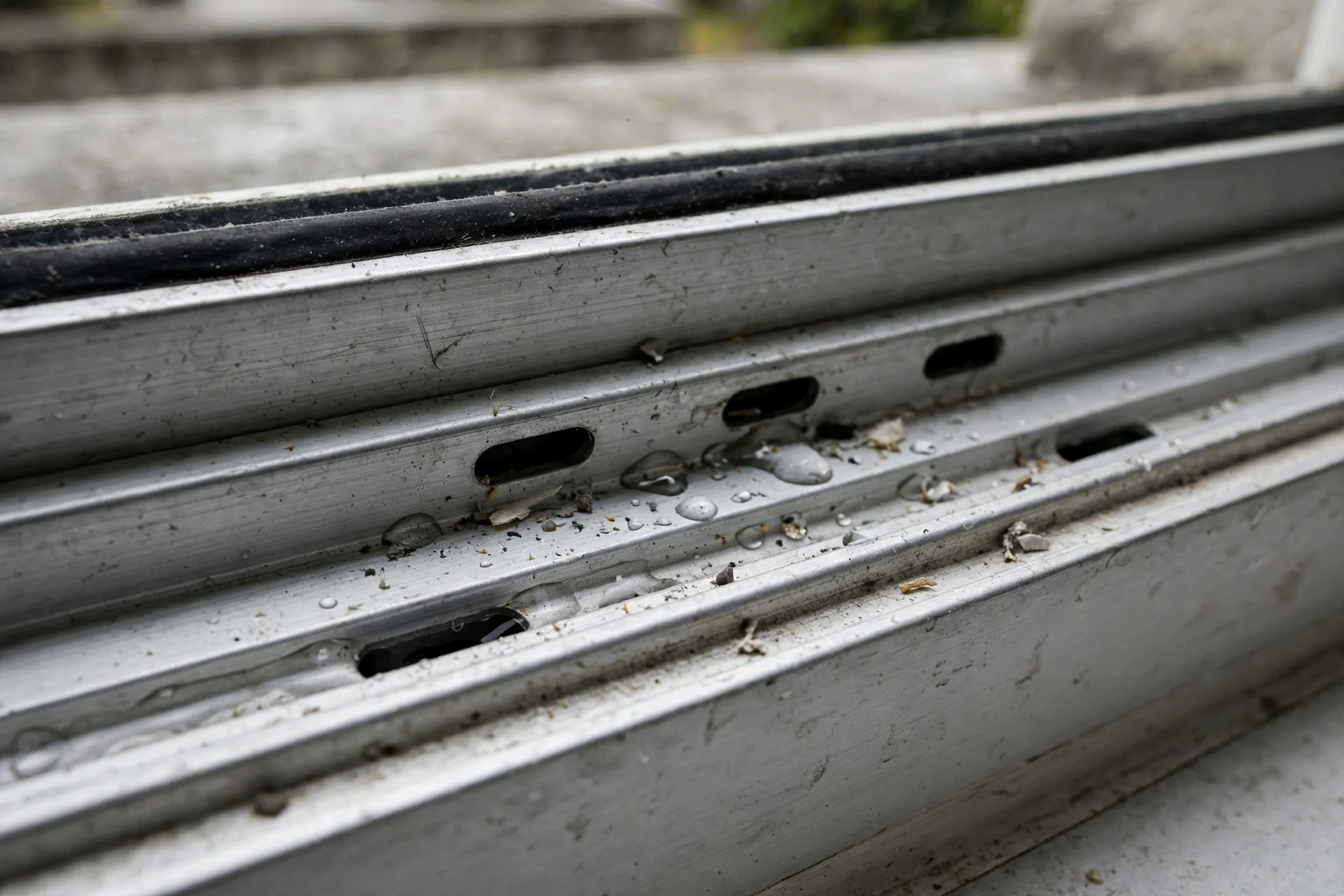
- Dirt, debris, or insect nests visible in the weep slots.
- Staining, damp patches, or peeling paint below the window.
- A musty smell or swollen timber around the sill.
- Locks and balances that have become stiff or corroded.
A simple test confirms a suspicion: pour a small amount of water into the outer track and watch whether it flows out of the exterior weep holes within a minute or two. If it sits there, the drainage path is blocked somewhere between the track and the outside. If no weep holes are visible at all, check the manufacturer's care instructions for your model before assuming they are missing — they may be hidden beneath the track or behind a cover, or the window may drain through a different design.
Weep Holes, Sill Pockets, and Hidden Channels Explained
The drainage path inside a window has three parts, and a failure in any one of them stops the whole system. The sill pocket is the collection channel at the bottom of the frame where water gathers. Internal channels or cavities carry water from the track to the pocket, and in some designs the interior weep slots in the track do not line up with the exterior holes because water travels sideways through a concealed channel first. The weep holes themselves are the exit: small slots on the exterior bottom of the frame that let water drip clear of the wall.
| Window type | Typical drainage design | What to watch |
|---|---|---|
| Vinyl sliding or double-hung | Visible weep slots in sill | Slots clog with dirt and insects |
| Aluminium casement | Hidden channels plus weep holes | Channels are hard to see and clean |
| Fibreglass frame | Concealed drainage or sloped sill | Check manufacturer guidance first |
| Fixed picture window | Continuous seals, often no weep holes | Failed seals leak straight into the wall |
| Timber frame | Sloped sill and flashing | Rot starts where water sits on the sill |
Never seal a weep hole with caulk, silicone, paint, or tape. It seems logical when ants march through the slot or a draught whispers in, but blocking the frame's only drain means the next rain fills the pocket until water spills over the inside lip and into the room. Fit a weep cover or fine mesh guard for insects, and fix the weatherstripping if draughts are the issue.
Clearing Blocked Weep Holes and Drainage Channels Safely
Cleaning a window drainage system is a gentle job, and force is the one thing that causes damage. Start by brushing loose dirt and debris out of the track with a soft brush, then vacuum the track so grit does not wash deeper into the channels. Find the exterior weep holes along the bottom of the frame — use a torch, because paint or grime can make them look like solid frame — and clear each one with a soft plastic pick, a pipe cleaner, or a short length of thin wire, working carefully so you do not scratch or puncture the frame.
- Brush and vacuum the track before touching the weep holes.
- Clear each exterior slot with a soft plastic pick or pipe cleaner.
- Flush the track with a small amount of water and watch it drain outside.
- Clean or replace weep covers that are stuck shut with dirt.
- Repeat the check after heavy rain and once each autumn.
After cleaning, retest with a small amount of water poured into the track and confirm it flows freely out of the exterior holes. If water still does not drain, the blockage may be inside a concealed channel, and forcing a screwdriver or a sharp object into the frame can crack vinyl or damage the internal chambers. At that point the right move is to call the installer or the window manufacturer, especially for windows still under warranty, rather than drilling new holes, which can void the warranty and create a new leak path.
Upgrading Older Windows With Better Pocket Drainage
Older windows were often installed before modern drainage thinking, and some have no weep holes at all. If the frames are sound, a window specialist can sometimes add drainage by fitting weep covers, improving the sill slope, or renewing the flashing below the window so water that escapes the frame is carried clear of the wall. In other cases the honest answer is replacement: a window whose frame chambers are already swollen, corroded, or rotted will not be fixed by cleaning, and a new unit with a designed drainage system is the durable solution.
When replacing windows, ask the supplier how the new unit drains: where the weep holes sit, whether they have covers, and how the sill pocket connects to the wall flashing below. A replacement that looks identical to the old window but drains properly can end years of damp patches, so confirm the drainage detail in writing before ordering rather than discovering afterwards that the new windows drain like the old ones.
Sealing and Flashing Details That Keep Water Moving Outward
Drainage inside the frame only works if the wall around the window also sheds water correctly. The flashing below the window — a sloped metal or membrane layer under the sill — catches any water that escapes the frame and carries it out over the wall below instead of letting it run into the structure. The joint between the window frame and the wall should be sealed with a compatible sealant, but the sealant belongs on the sides and top, never across the weep holes at the bottom, because the bottom of a window is a drain, not a seal.
- Keep sealant off the bottom edge so weep holes stay open.
- Check the sill flashing for gaps or corrosion each year.
- Make sure the exterior sill slopes slightly outward, not inward.
- Repaint timber sills before bare wood is exposed to rain.
- Clear leaves and debris from the sill so water cannot pond.
Painters and caulkers cause a surprising number of drainage failures by sealing weep holes during routine maintenance. If you hire someone to paint or reseal around windows, tell them explicitly that the small slots at the bottom of the frame must stay open, and check the slots yourself when the work is done. A ten-second check after painting saves a season of hidden water damage.
When Trapped Window Water Points to a Bigger Wall Problem
Not every wet window is a window problem. If several windows on the same wall show damp, or the wall stays wet after the drainage system is cleaned and tested, water may be coming from above — a failed gutter, a roof edge leak, or cracked render — running down inside the wall until it appears at the window. Damp that returns after cleaning, staining that spreads across the wall, and mould growing on the wall rather than the frame all point beyond the window itself.
This is the point to call a professional. A window installer can confirm whether the unit drains as designed, while a building surveyor or damp specialist can trace water through the wall and find the real entry point. Do not keep cleaning weep holes when the problem is a roof or wall defect, and do not let a window be replaced when the wall above it is the actual source. A correct diagnosis costs less than the wrong repair repeated twice.
Window Pocket Drainage Care Across the Seasons
Window drainage needs little attention, but it needs it regularly. Spring is the time to check for winter damage and clear the grit that winter rain washed into the tracks. Summer is when condensation and washing put water into the frame, so a quick check after the first heavy rain of the season confirms the system still drains. Autumn matters most: falling leaves, dust, and insect activity clog weep holes just before the wettest months, so a thorough clean in early autumn prevents most winter problems.
| Season | Maintenance task | Why it matters |
|---|---|---|
| Spring | Inspect seals and test drainage | Finds winter damage before spring rain |
| Summer | Check after the first heavy rain | Confirms the system drains under load |
| Autumn | Deep clean tracks and weep holes | Clears leaves and debris before winter |
| Winter | Watch for water standing in tracks | Catches blockages while damage is still small |
Add the check to a routine you already keep, such as cleaning gutters or servicing the boiler, and it will actually happen. Two minutes per window, twice a year, is enough for most homes, and it is the difference between a window that quietly manages water for decades and one that slowly soaks the wall beneath it.
Final Thoughts: Dry Pockets Mean Dry Walls Around Your Windows
Window pocket drainage is a small system doing a large job. A few slots, channels, and weep holes stand between every rainstorm and the wall below your windows, and they only fail when they are blocked, sealed, or ignored. Learn where your weep holes are, keep them clear, test them with a little water twice a year, and never let paint or caulk close them. A window that drains properly protects the frame, the sill, and the wall around it — and it does so silently, for as long as you let it.
Window Pocket Drainage Questions Homeowners Ask
Why is there water in my window track after rain?
Some water in the outer track after rain is often normal, because many vinyl and aluminium windows are built to collect rain in the track and let it out through weep holes. It becomes a problem only if the water is still sitting there long after the rain stops, or if it spills over the inside lip onto the sill or floor.
Can I seal weep holes to stop draughts or insects?
No, never seal weep holes with caulk, paint, or tape. Blocking them removes the frame's only drain, so water backs up and leaks into the wall. Fit a weep cover or fine mesh guard for insects, and fix the weatherstripping if draughts are the issue.
How do I find weep holes I cannot see?
Look along the exterior bottom of the frame with a torch, checking for small slots or notches, and check the manufacturer's care instructions for your model. Some designs hide the openings beneath the track or behind covers, and caulk or paint can make them look like solid frame.
How often should window drainage be cleaned?
Clean the tracks and weep holes at least twice a year, ideally in spring and early autumn, and check again after heavy rain. Homes near trees or dusty roads may need more frequent cleaning because leaves and grit clog the small slots quickly.
Do all windows have weep holes?
No. Many vinyl and aluminium operating windows use weep holes, but fixed picture windows often rely on continuous seals instead, and some wood and fibreglass windows drain through sloped sills or concealed channels. If your windows have no visible openings, check the manufacturer's documentation before assuming the drainage is missing.