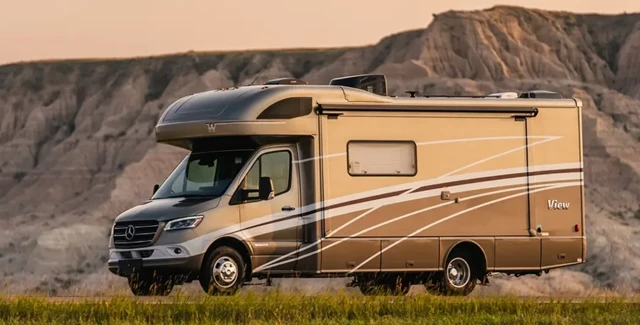
If you’ve ever searched for “class c rv for sale” or “class c motorhomes for sale”, you’re not alone. These rigs strike such a sweet balance between space, maneuverability and cost that they’ve become the go-to for weekend warriors, growing families and full-time nomads alike. I’ve seen it in countless dealerships and online listings: people who were initially overwhelmed by RV options, then narrowed in on Class C and breathed a little easier. So let’s talk about what you’re really buying, what to watch out for, and how to land the right deal.
What is a Class C Motorhome?
I like to call the Class C the “Goldilocks” motorhome not too big, not too small. It’s just right for many buyers.
Defining features
- It’s built on a cutaway van or truck chassis (rather than a full bus-style frame).
- You’ll often see the signature over-cab “bunk” or storage area above the driver’s seat that little alcove is a strong clue you’re looking at a Class C.
- Typical lengths can range from roughly 20 to 35+ feet, depending on model and how fancy it is.
Why folks gravitate toward them
- Because they’re generally more affordable than the large Class A rigs. As one buyer’s guide notes: “Class C motorhomes are the least expensive option” among motorized RVs.
- They offer a strong mix of livable space and driveability easier to handle than a full bus, yet more comfortable (and sometimes more private) than a van-based camper.
- For families especially, the over-cab bunk, slide-outs (in many models) and full amenities make them truly viable for serious trips.
Why Use the Keywords “class c rv for sale” and “class c motorhomes for sale”?
When you’re actually shopping, those are the phrases people use on listing sites, dealer pages and forums. Since we’re crafting an article with SEO in mind, weaving the terms naturally helps you be found by search engines and by real buyers at the same time. But here’s the thing: stuffing the keywords will make the copy read awkwardly. So the aim is to use them strategically and organically.
Starting the Search: What You Should Ask Yourself First
Before you click “Inquire” on that listing, ask: What kind of travel do I want to do? Because your answer changes everything.
1. How many people will you carry now and later?
If it’s just you and a partner, you may be fine with a smaller length-Class C (say ~22-24 ft). But if you’re thinking family + pets + occasional guests, you’ll want more layout flexibility, storage and perhaps dual slides. Many Class C models sleep 4-8 people.
2. Where do you intend to go, and how often will you move?
If you’re doing occasional weekend trips as a getaway, pretty much anything driveable works. But if you’re full-time or going remote off-grid, you’ll care more about tank size, insulation, power capacity, storage, and ease of maintenance. Reddit threads consistently warn:
“Be very cautious full-timing in a class C. Many have low cargo carrying capacities until you get up to the Super C size.”
3. Budget is more than sticker price.
Sure, there’s the purchase price, but you’ll also be juggling fuel, insurance, maintenance, storage (if you don’t have space at home) and maybe resort/campsite fees. For “class c motorhomes for sale,” you’ll see broad price ranges so know your full cost. According to RVUSA: some Class C units range from $40,000 to more than $400,000, depending on size and luxury.
4. Driving and parking logistics matter.
Yes, Class Cs are easier than Class A in many ways but still bigger than your average SUV. Knowing height, width, length and towing capacity is key. One helpfully realistic guide alludes to this: knowing your rig’s height is a must.
What Features to Look for in Listings: “Class c RV for sale” Breakdown
Now let’s translate wants into features. When you scan listings under “class c rv for sale,” check (and check again) these key things.
Chassis & powertrain
- Is it built on a Ford E-Series cutaway, or a Mercedes Sprinter, or something heavier-duty? Many Class C rigs use the Ford E350/E450 chassis.
- Gasoline vs diesel? Diesel typically costs more initially, but may offer better longevity and smoother performance though also often higher maintenance.
- Mileage / hours on the rig (if used) matters. A low-mile used rig may still have age-related wear (tires, rubber seals, appliances) be realistic.
Living space & layout
- Does it have a slide-out (or two)? That space boost can transform the feel of the living area. According to “Ultimate Guide…”: Class C motorhomes often feature more sleeping & storage space and slide-outs for expanded living areas.
- Sleeping arrangements: Over-cab bunk, rear bedroom, convertible dinette? A listing that says “sleeps 6” might hide kids’ bunk over the cab.
- Kitchen & bath: Full-size fridge vs mini, solid surface vs laminate counters, shower size these all affect comfort.
- Storage: Both inside and outside basements, compartments, attic space overhead. The buyer guide at RVshare lists exterior storage of 50–150 cubic feet in typical Class Cs.
Vehicle dimensions & weight
- Length and height: A 28-foot rig might fit many campsites; a 33-footer may challenge some. RVshare’s guide shows sizes around 20–33 feet.
- Gross Vehicle Weight Rating (GVWR) and cargo carrying capacity: Some rigs are tight on load when you include people, gear, water, waste and propane. The Reddit advice above is clear: check this.
- Towing capacity or hitch: Are you going to tow a car, trailer, ATV? If yes, check tongue weight, hitch rating and electrical/safety setup.
Amenities & condition
- Appliances and systems (AC, furnace, refrigerator, generator/solar if equipped)
- Water/waste tank capacities, hookups for external power, an awning, levelers
- Condition: Any leaks, water damage, roof issues, age of tires, mileage/hours on engine, service history. As one Reddit commenter put it:
“The really big one is leaks… If it has a slide-out… that’s the side it will most likely happen.”
How Much Does a Class C Cost and What to Expect in Value?
Since our keywords include “class c motorhomes for sale”, you’ll bust across a wide price spectrum. Here’s how to read that.
- Entry-level new or lightly-used Class C rigs may start in the $70,000 to $120,000 range, depending on length and amenities. Consumer Reports referenced the general range $70K-$200K for many rigs.
- On the used market, you might find rigs in the $40,000-$60,000 range or even less, especially if older or simplest specs.
- Luxury models, Super C (built on heavier truck chassis), or diesel class C rigs can climb well beyond $200K. One listing example of a Super C built on a truck chassis was 39’4” long with GVWR around 31,000 lbs.
At the same time, remember: value isn’t just about price. What matters is what fits your travel style and how much life it has left. A slightly higher-priced rig in better condition might prove a smarter buy long-term than bargain-hunting a shaky one.
Tips to Shopping Smart Don’t Rush the Deal
You’ve got your list. You’re comparing listings with keywords like “class c rv for sale” and “class c motorhomes for sale”. Here are more real-world tips to avoid buyer’s regret.
Try before you buy
If you can, rent a Class C for a weekend. Feel the driving experience, live in the space a bit. A guide from RVshare emphasizes that renting before buying helps you gauge what you’ll actually like.
Inspect everything (dryer than you expect, stronger than you imagine)
- Hire an independent RV inspector if you’re buying used. Someone on Reddit said:
“Hire an RV inspector. 500 bucks to turn up every secret the rig is hiding.”
- Roof and sidewalls: look for soft spots, prior leaks, water stains around the over-cab area.
- Slides: do they extend and retract smoothly? Are the seals intact?
- Check engine, transmission, chassis service history. Even if living area looks great, the driving gear matters.
- Tires & brakes: age of tires is a major cost if they need immediate replacement.
- Weight: Get to a weigh station if possible and see how your actual load stacks up.
Size matters in practice
Even if you can drive a 32-ft rig, think about the campsites you’ll use. Can you maneuver easily? Are you comfortable with long turns or backing up in tight spaces? A smaller rig might mean fewer compromises. As one driving-guide remarked: “Drive slowly with an RV… larger size means longer stopping distances.”
Future proof the rig
- Check insulation and climate control: If you plan winter travel or hot-weather days, you’ll want a rig that handles extremes.
- Power/systems for off-grid: solar panels, lithium batteries, dual house batteries, high-capacity generator these matter if you’re boondocking. Some guides highlight this in modern Class Cs.
- Storage and layout flexibility: Your needs might change kids grow, pets join, guests come. Buying something that adapts saves stress later.
Financing, resale and lifestyle fit
- Financing: Interest rates for RVs are often higher than for cars. Make sure you’ve worked out monthly cost including insurance, fuel and upkeep.
- Resale: Choose brands known for durability, reliability and good parts/service support.
- Lifestyle fit: Are you going to use it 5 times a year? 50 times? Live in it? Be honest. Some buyers grab a huge rig only to use it rarely and regretted the whole cost structure.
Where to Find Listings Searching “Class C Motorhomes for Sale” Done Right
Okay, you’re ready to browse. Here are places and strategies where “class c motorhomes for sale” show up.
Online marketplaces
- RVTrader, RVUSA, and other specialised RV listing sites. When browsing, use search filters like “Class C” + length range + price to narrow to what you can realistically handle.
- Manufacturer websites: Some dealers list new incoming units or demo models.
- Local dealerships: Sometimes they have trade-ins or floor models that can be discounted.
Keyword search tips
- Use both phrases: “class c rv for sale” and “class c motorhomes for sale” because some sellers use one or the other.
- Add modifiers: year (“2023 class c motorhomes for sale”), length (“25ft class c rv for sale”), condition (“used class c rv for sale”).
- Price‐range filters: Set your minimum/maximum so you don’t get distracted by ultra-luxury models or tiny under-powered ones.
Visit in person or view thoroughly
- Always go see the rig if possible. Photos can hide wear. The over-cab bunk, roof lines, slide seals all the little things count.
- Ask for a full walkthrough, including the driving test, camp mode (set up) test, water/black/grey tank check, outside inspection.
- Request service records, original owner if possible, warranty transfers.
Brand & Model Highlights What to Consider
Without promoting specific brands (because availability varies), let’s mention what some buyer-guides highlight in the Class C world so you get a feel for comparing.
- The buyer guide at RVshare names models like Winnebago View and Jayco Melbourne built on Mercedes-Sprinter chassis as strong choices.
- Models that come with multiple slide-outs, residential-style amenities, higher-end finishes tend to sit at the premium end.
- “Super C” variants (still Class C by name, but built on a heavier truck chassis) offer more payload, more towing, more luxury but at higher cost and size.
Bottom line: If you find a listing under “class c motorhomes for sale” and it’s from a known manufacturer, fits your size/price zone and checks out in condition buying with confidence is far more likely.
Mistakes to Avoid When Shopping for a Class C RV
Let’s keep it real and talk about the common traps because knowing what not to do is as important as knowing what to do.
1. Buying on looks alone
That shiny exterior only tells half the story. If the roof seal is failing, the slide mechanisms are worn or the frame is weak you’ll regret it. The forum post above on Reddit:
“The really big one is leaks… If it has a slide-out… that’s the side it will most likely happen.”
2. Ignoring weight limits
People sometimes cram in gear, passengers, pets, extra tanks and run past the rig’s cargo-carrying capacity. That stresses the suspension, reduces safety and may shorten component life.
3. Not thinking about driving/parking challenges
If your rig is 35 feet long and you live in an urban or hilly area, maneuvering might become a chore. You might regret not going a bit smaller. One guide said: Class C sizes vary “so there’s plenty of variety in available floor plans.”
4. Failing to budget for upkeep
RVs aren’t cars. They age differently. If you buy a used rig without service records or with known issues you’re not going to fix, you’ll spend more than expected. Consumer Reports notes: “Be prepared for the demands of maintaining a motorhome.”
5. Not testing the rig in “real use”
Driving for an hour is one thing; staying in it for several nights or packing everything for a real trip is another. If you skip the real-use test, you might find the layout doesn’t flow, the bed is uncomfortable, or gear storage is too tight.
Why Now Might Be a Good Time to Shop
You might be wondering: “Is it a buyer’s market for class c motorhomes for sale right now?” There are some emerging signals that yes, it could be a good moment.
- The RV market got heated during and post-pandemic, but some reports show price stability or moderation in some segments.
- Technology and amenities in modern rigs (solar setups, connectivity for remote work) are becoming common so you’ll find feature-rich Class C models at better value.
- For those earlier to the RV lifestyle, there’s more resale inventory as people transition out so more “class c rv for sale” listings may mean better choice.
How to Narrow It Down and Make Your Decision
So you’ve reflected on your travel style, you’ve looked at listings, you’ve visited a few rigs. How do you land on one? Here’s a decision checklist I use (and you can use too).
| Step | What to Ask | Why It Matters |
| Match size to use | Will I be driving this frequently? Camping weekly? Living in it? | Ensures you are not over-rigged or under-equipped |
| Budget total cost | Purchase + fuel + insurance + maintenance + storage | Avoid bitter surprises |
| Inspect condition | Roof, slides, chassis, tires, weight compliance | Big repair costs often hide behind gorgeous exteriors |
| Evaluate layout | Bed comfortable? Bathroom placed well? Storage ample? | Living experience depends on this |
| Test drive & stay overnight | Can I sleep in it? Drive it for an hour? | The rig must operate as both vehicle and home |
| Review resale/parts/service | Is the brand supported? Are parts common? | Bolsters long-term value and reduced headaches |
| Negotiate smart | Have service records, know flaws, set your walk-away point | Ensures you pay what it’s worth—not what it’s listed for |
Final Thoughts: Your Road, Your Rig
At the end of the day: if you’re looking at “class c rv for sale” or scanning “class c motorhomes for sale”, know that you’re entering a space rich with options but also rich with nuance. The truth is: the right rig for you isn’t necessarily the biggest, newest or flashiest. It’s the one that fits your life, fits your travel ambitions, and makes the process of “getting away” feel effortless rather than exhausting.
I’ve seen buyers light up when they find a layout that just fits: the little bunk for the kid, the dinette that folds into the bed, the exterior storage for gear, the engine that doesn’t feel like you’re driving a moving truck. So take your time. Do the homework. Use the keywords strategically but read deeply between the lines of listings. Because when you pick the right Class C motorhome, you’re not just buying a vehicle you’re investing in memories, freedom, and scenes from the road you haven’t yet dreamed up.
Keep an eye for more latest news & updates on Tribune!