A house can be perfectly sound and still feel dull. The paint is fine, the furniture works, nothing is actually broken — yet the rooms feel flat, dated, or simply not beautiful. That is the moment for stylish upgrades: focused design changes that refresh how a house looks and feels without the disruption of a full renovation. A new finish here, a better light there, a surface replaced or a detail swapped, and suddenly the whole home feels considered again.
The upgrades in this guide are chosen for their visual return. Each one targets something your eye touches every day — a wall, a floor, a handle, a light — so the improvement is noticed constantly rather than once. They are also deliberately ordered: palette first, then surfaces, then the small details that date a house fastest, then light and furniture. Follow that order and the result will look like a designer planned it, even if you did every step yourself on weekends.
The Short Answer: Which Stylish Upgrades Make a House Beautiful Fastest?
The fastest stylish upgrades are a fresh neutral paint scheme, new cabinet and door hardware, modern light fixtures, and one statement surface such as a new backsplash or a large mirror. Together these changes can transform a house in a matter of days for a modest budget, because they replace the details that signal age — shiny brass, ornate fittings, yellowed paint, and flat lighting — with the clean lines and calm finishes that define current design. Floors and furniture come later, once the backdrop is right.
Build a Fresh Design Palette Before You Buy Anything
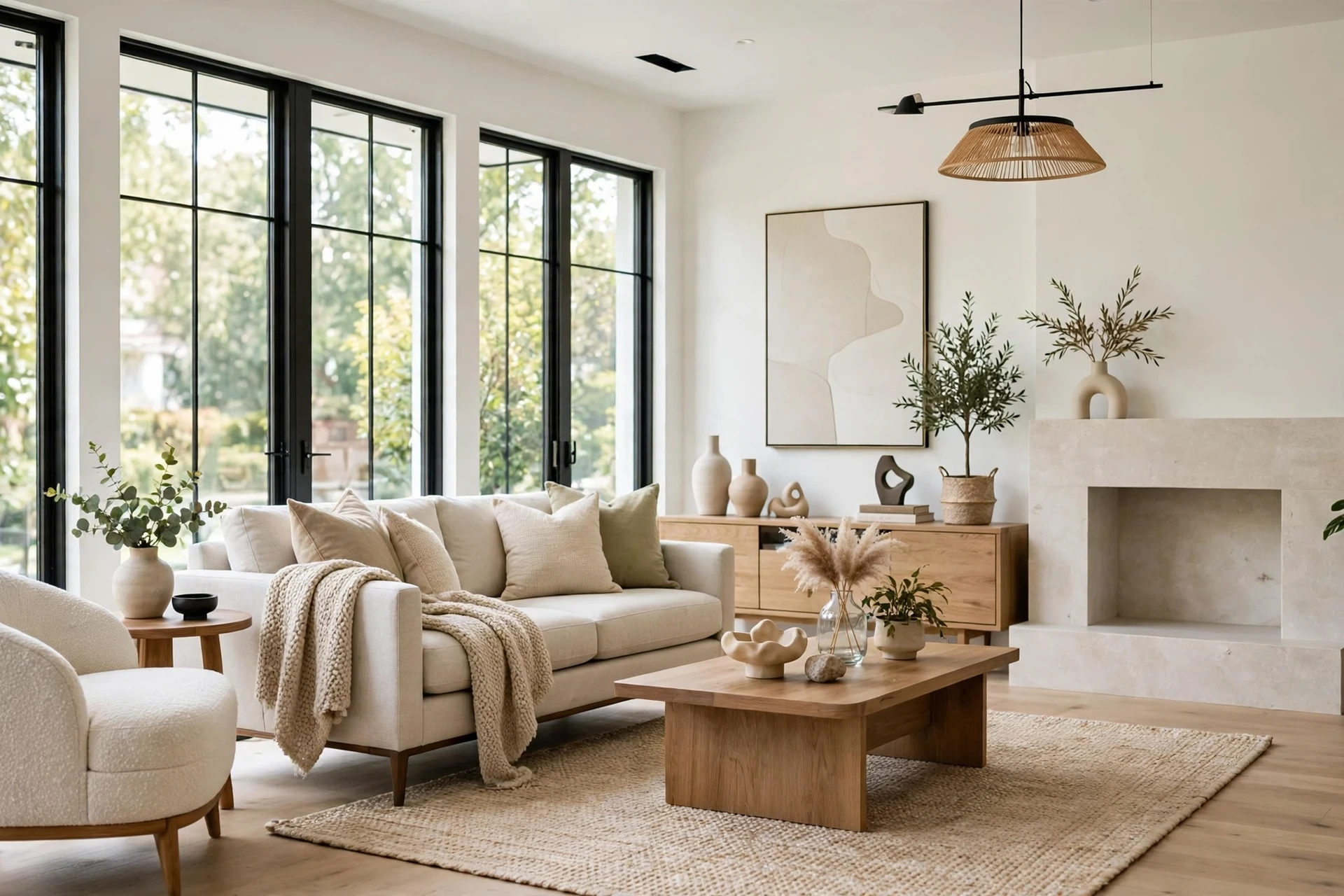
Every stylish home starts with a palette, and the most reliable one is simple: a warm white or soft greige for walls, one timber tone for floors and furniture, one metal finish for hardware and lighting, and a single accent colour repeated three times in each room. Warm whites such as soft ivory or pale greige make rooms feel larger and brighter, while a deep accent — forest green, navy, or terracotta — adds depth when used on one wall, a cushion, and a piece of art rather than splashed everywhere.
Test the palette before committing. Paint large swatches on two walls and look at them in morning daylight, afternoon sun, and evening lamplight, because the same colour can read grey in one light and pink in another. Carry the chosen wall colour and trim colour through the whole house so rooms flow into each other, and keep the accent colour consistent from room to room. A palette decided on paper costs nothing and prevents the most expensive design mistake of all: buying beautiful things that do not belong together.
Choosing One Metal Finish So Your Upgrades Look Deliberate
Mixed metals are the fastest way to make new upgrades look accidental. Choose one finish — matte black for a contemporary look, brushed brass for warmth, or brushed nickel for a cooler scheme — and use it for taps, handles, light fittings, and curtain rods on the same floor. The finish does not need to match exactly across every item, but staying in one family makes the house feel planned rather than assembled from whatever was on offer.
Upgrade the Surfaces Your Eyes Touch First
Walls and floors set the tone of every room, so they deserve attention before furniture or decoration. A fresh coat of paint in a warm neutral is the single highest-return upgrade in any house, and adding texture takes it further: vertical slat wood panels behind a sofa, painted panelling in a hallway, or a single wallpapered feature wall in a bedroom can give a flat room the depth that makes it feel designed. Keep the texture to one wall per room so it reads as a feature, not a theme park.
For floors, consistency matters more than luxury. Wide-plank engineered hardwood or luxury vinyl plank in a light, natural finish makes rooms feel larger and connects spaces that currently change material at every doorway. If new flooring is out of reach, large-format rugs in a neutral tone can cover worn carpet, define seating zones, and add the texture a room is missing. In kitchens and bathrooms, peel-and-stick vinyl tiles offer a modern look for a fraction of the cost of retiling, and they can be fitted over a sound existing floor in a weekend.
Swap the Details That Date a House Fastest
Small details betray a home’s age more honestly than its furniture does. Shiny brass handles, ornate light switches, dated taps, and hollow-core doors with tired hinges all signal an older house, and every one of them is a cheap, contained swap. Replace cabinet handles with slim bar pulls, change light switches and sockets to a clean flat-plate design, and fit new lever handles on interior doors. Each job takes minutes, none of them creates mess, and together they quietly modernise every room they touch.
Doors themselves are worth a look. Painting interior doors in the same warm white as the trim, or replacing the most visible ones with simple panelled or glass-panelled designs, lifts a hallway instantly. In the kitchen, replacing just the cabinet doors — keeping the existing carcasses — gives the effect of a new kitchen for a third of the cost, and new soft-close hinges make old cupboards feel new every time they are opened. These are the upgrades guests never consciously notice, which is exactly why they work: the house simply feels newer.
Layer Light the Way Designers Do
A single ceiling light makes even a beautiful room feel flat, because it casts the same hard light everywhere and leaves corners in shadow. Stylish homes use three layers: ambient light from a ceiling fixture or recessed lights on a dimmer, task light from reading lamps and under-cabinet strips, and accent light from a picture light, a shelf light, or a small lamp in a dark corner. Warm LED bulbs, around 2700K, give the glow that makes a room feel inviting; cool white bulbs belong in a workshop, not a living room.
The fixtures themselves are part of the design. A sculptural pendant over a dining table, slim globe pendants over a kitchen island, or a simple arc floor lamp beside a sofa can be the most striking object in the room. Replace dated ceiling roses and flush mounts with clean, minimal designs in your chosen metal finish, and add mirrors opposite windows to bounce daylight deeper into the room. Good lighting does more than any single piece of furniture to make a house feel beautiful, because it changes how every other upgrade is seen.
Choose Furniture Shapes That Make Rooms Feel Beautiful, Not Crowded
Modern furniture is defined less by price than by shape: clean lines, straight silhouettes, and lighter frames. A low-profile sofa with slim arms, a dining table with a simple pedestal base, and chairs without heavy ornamentation make rooms feel open, while bulky, overstuffed pieces eat floor space and block light. Before buying, measure the room and leave at least 75 centimetres of walking space around the main pieces; a room that is easy to move through always looks more beautiful than one that is elegantly furnished but impossible to cross.
If new furniture is not in the budget, edit what you already own. Remove one piece from each room — the extra chair, the second side table, the bookcase that blocks the window — and see how much larger the room feels. Re-cover tired cushions in a solid accent colour, repaint a dated side table, and group objects on surfaces in threes rather than scattering them. A room with fewer, better-chosen pieces always looks more stylish than a room filled to the edges, and the edit costs nothing at all.
Stylish Upgrades Ranked by Visual Impact and Effort
Not all upgrades repay equally. Paint and hardware deliver the most beauty per pound, lighting comes next, and large furniture purchases should wait until the backdrop is right. The table below ranks the most common stylish upgrades so you can spend in the order that shows fastest, and stop when the house already feels beautiful enough — a home does not need every upgrade on the list, only the ones that fix what actually looks tired.
Stylish Upgrade Slip-Ups That Waste Money and Ruin the Look
The most expensive slip-up is chasing a trend instead of a palette. A fashionable colour or a statement wallpaper that clashes with the rest of the house will need replacing within a year, while a calm neutral backdrop lasts a decade. A second waste is buying statement pieces before fixing the basics: a designer sofa in a room with yellowed paint and a flickering ceiling light still looks like a tired room, only with an expensive sofa in it. Fix walls, light, and hardware first, and the furniture you already own will look better immediately.
Knowing When a Beautiful Upgrade Needs a Professional’s Hands
Most stylish upgrades are safe weekend work: painting, swapping hardware, changing light fittings on an existing circuit, hanging mirrors, and fitting rugs. The boundary appears when the work involves mains wiring, plumbing, or structure. Installing new circuits, moving a light fitting to a new position, or replacing a consumer unit should be done by a qualified electrician, and any work on gas appliances or pipework by a registered gas engineer. A beautiful upgrade that is wired badly is not an upgrade at all.
Final Thoughts: Beautiful Today, Still Beautiful Next Year
A stylish home is not built in a single shopping trip. It is built by deciding a palette, refreshing the surfaces that frame every room, swapping the small details that date a house, layering light properly, and then choosing furniture that fits the space it lives in. Do those steps in order and the house will look beautiful today — and, because the choices are calm and consistent rather than fashionable, it will still look beautiful next year. Start with paint and hardware this weekend, and let the bigger upgrades follow when the backdrop is ready for them.
Stylish Home Upgrade FAQs
What is the cheapest stylish upgrade I can do this weekend?
Painting one feature wall and swapping cabinet and door hardware are the cheapest high-impact upgrades. Both can be finished in a weekend for a modest budget, and together they change the colour, texture, and detail of a room without touching the structure or the furniture.
Which paint colours make a house look modern right now?
Warm whites, soft greige, and muted sage remain the safest modern choices because they brighten rooms and suit most furniture. Deep forest green, navy, or terracotta work well as a single accent wall or repeated accent colour, but avoid painting whole rooms in a bold trend colour that may date quickly.
Should I replace my flooring or just add rugs?
If the existing floor is sound but tired, large neutral rugs are the better first step — they define zones, add warmth, and hide wear for little cost. Replace the flooring itself when it is damaged, uneven, or changes material at every doorway, because consistency across rooms is what makes a home feel modern.
How do I make a modern home feel warm rather than cold?
Mix clean shapes with natural materials: timber, linen, wool, and stone soften hard modern lines. Use warm LED bulbs, add plants, and repeat one warm accent colour around each room. A modern home feels cold when it has only hard surfaces and cool light; texture and warmth fix that without changing the style.
Is it better to upgrade the kitchen or the bathroom first?
The kitchen usually gives the bigger visual return because it is larger and used more, and cabinet door replacements plus new hardware can transform it for a moderate budget. A bathroom is cheaper to refresh and faster to finish, so if time or budget is tight, start there and enjoy a finished room sooner.
Do stylish upgrades add value to my home?
Well-chosen upgrades such as fresh paint, modern lighting, updated hardware, and consistent flooring generally make a home more attractive to buyers, though no cosmetic upgrade guarantees a specific return. The safest approach is to choose timeless, neutral finishes that appeal broadly rather than bold personal statements.